
Law Firm Website Builders: How No-Code Platforms Compare to Custom WordPress for Legal Sites
TL;DR
- A law firm website builder is easy to use but limited in growth
- No-code platforms restrict SEO, structure, and scalability
- Custom WordPress sites allow full control over design and SEO
- Builders work for basic websites, not for competitive legal markets
- Strong site structure is difficult to achieve with templates
- Custom development supports long-term rankings and conversions
- The right choice depends on whether you want convenience or cases
Introduction
Many law firms choose a law firm website builder because it feels simple.
You can launch quickly, use templates, and avoid technical work. At first, it appears like the perfect solution.
But over time, most firms realize something is missing. The website looks fine, but it does not rank, does not convert, and does not bring in consistent cases.
The real difference between builders and custom websites is not convenience. It is performance. The right choice determines whether your website becomes a basic online presence or a system that drives real growth.
How Law Firm Website Builders Work and Where They Fall Short
A law firm website builder is designed to make website creation simple. It offers templates, drag-and-drop tools, and pre-built layouts that allow you to launch a site quickly without technical knowledge.
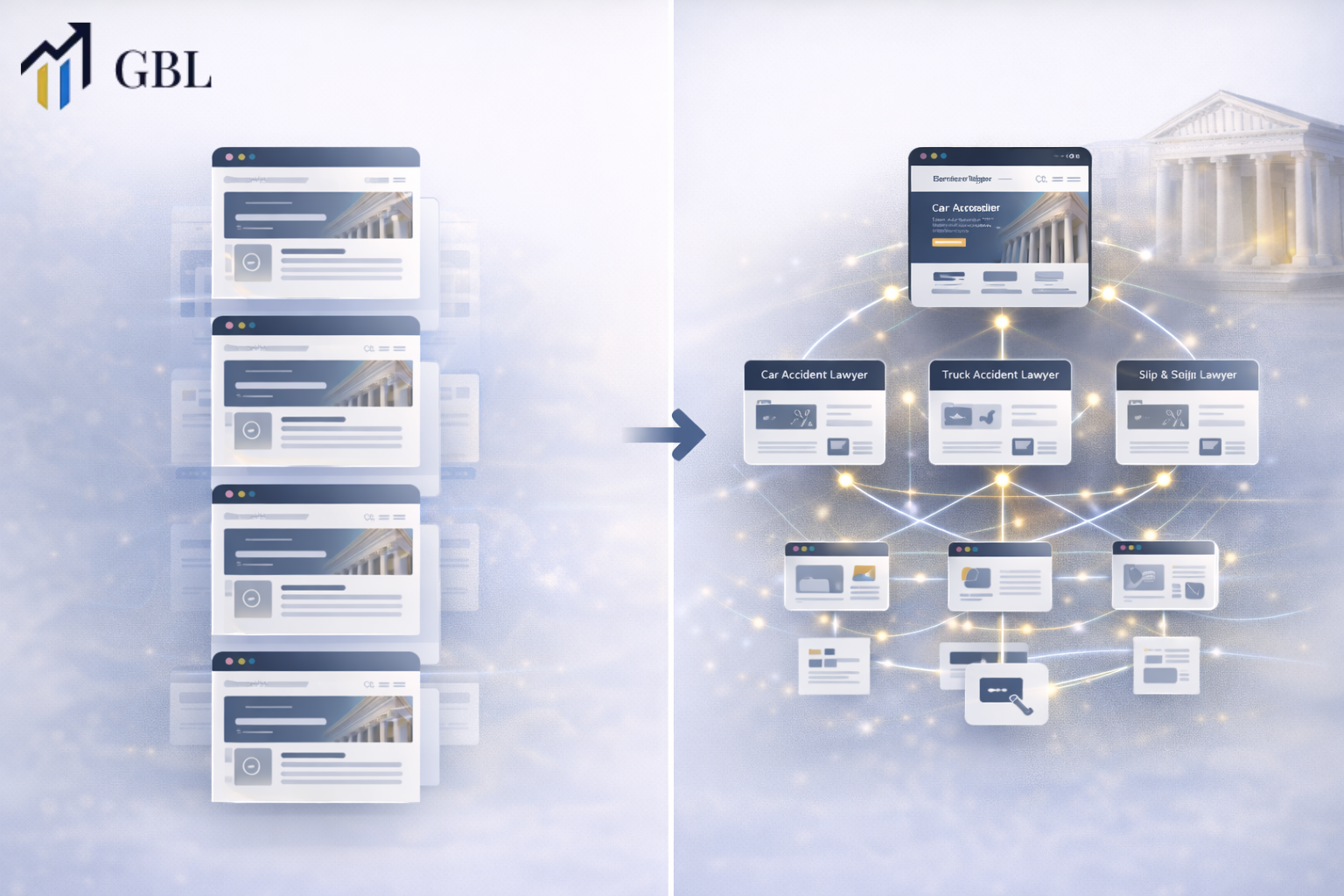
While this simplicity is helpful at the start, it comes with limitations. Builders are designed for general use, not for competitive industries like legal services. They restrict how your website is structured, how pages are connected, and how SEO is implemented.
Real Law Firm Example
A firm uses a website builder and launches a clean-looking site. However, all service pages follow the same template and lack depth. Another firm builds a custom site with structured pages and internal linking. More leads are produced by the second firm, which has a better ranking.
Key Points
- Easy to use and quick to launch
- Limited control over structure
- Restricted SEO capabilities
- Templates reduce flexibility
Builders solve the problem of creating a website, but they do not solve the problem of generating cases.
Most law firms choose convenience first and realize the limitations later.
How Custom WordPress Websites Support SEO and Growth
Custom WordPress websites are built for flexibility, control, and long-term growth. Unlike a typical law firm website builder, WordPress allows you to design your website exactly the way your firm needs it. You are not limited by templates or fixed layouts. Instead, you can build a structure that matches your services, your target audience, and how people actually search for legal help.
This level of control makes a big difference for SEO. Your website can be organized into clear service pages, supported by related content, and connected through internal links. Each page can be optimized for a specific keyword and designed to guide users toward taking action. Over time, this creates a strong foundation that helps your site rank higher and convert more visitors into clients.
Real Law Firm Example
One law firm builds a custom WordPress website with separate service pages for each practice area. They support these pages with detailed blogs that answer common questions and explain real situations. Another firm uses a builder with a limited structure and only a few general pages.
As time passes, the custom WordPress site begins to rank for multiple keywords, attract more traffic, and generate consistent inquiries. The builder-based site remains limited because it cannot expand or adapt easily.
Key Points
- Full control over site structure and page hierarchy
- Stronger SEO optimization for each service
- Flexible design tailored to user behavior
- Ability to scale with new content and services
- Better integration of content, SEO, and conversion strategy
Custom development allows your website to grow with your firm. As you add new services, expand into new areas, or create more content, your website can evolve without limitations. This creates a long-term asset that continues to perform and improve over time.
Most law firms start with simple solutions, but they quickly reach a point where those solutions cannot support their growth. This is where a custom WordPress website becomes the difference between staying stuck and building consistent results.
Why Site Structure Is Limited on Website Builders
One of the biggest limitations of a law firm website builder is structure. Templates are designed to look good, but they are not built for complex content systems.
Law firms need structured websites with multiple service pages, supporting content, and internal linking. Builders often make this difficult because they restrict page hierarchy and linking flexibility.
Real Law Firm Example
A firm using a builder struggles to create separate silos for services. Another firm builds a custom site with clear structure and connected pages. The second firm ranks higher because its site is easier for search engines to understand.
Key Points
- Limited page hierarchy
- Restricted internal linking
- Difficult to build content silos
- Weak SEO structure
Without proper structure, your website cannot build authority.
This is where most builder-based websites fail to compete.
How Builders Affect Conversion and Lead Generation
Website builders focus on design, but they often ignore conversion strategy. Even among the best law firm website designs, templates are often created for general use, not for guiding users through a legal decision. A high-converting website needs clear messaging, strong CTAs, and a structured user journey—yet builders make it difficult to fully customize these elements.
Real Law Firm Example
A firm uses a builder template with basic CTAs, while another invests in one of the best law firm website designs with a clear, intentional conversion path. The custom site generates more inquiries because it effectively guides users toward taking action.
Key Points
- Limited control over CTAs
- Generic user flow
- Weak conversion optimization
- Reduced lead generation
Conversion is what turns traffic into cases, and the best law firm website designs prioritize this above all. Most law firms overlook this when choosing a builder.
The Real Cost of Choosing the Wrong Website Platform
Many law firms choose builders because they seem cost-effective. However, the real cost is not the monthly fee. It is the lost opportunity.
If your website cannot rank or convert, you lose potential clients every month. Over time, this cost becomes much higher than building a proper system.
Real Law Firm Example
A firm saves money using a builder but struggles to generate leads. Another firm invests in a custom site and builds consistent traffic. The second firm sees a higher return over time.
Key Points
- Lower upfront cost
- Higher long-term opportunity cost
- Limited growth potential
- Reduced ROI
The platform you choose affects your long-term results.
Most law firms do not realize this until they need to rebuild their website.
When a Law Firm Website Builder Might Still Make Sense
While builders have limitations, they are not completely useless. They can work in specific situations where growth is not the primary goal.
For example, small firms or new practices may use builders as a temporary solution.
Real Law Firm Example
A new firm launches a basic site using a builder to establish an online presence. Later, they switch to a custom system as they grow.
Key Points
- Suitable for early-stage firms
- Good for simple websites
- Limited long-term use
- Not ideal for competitive markets
Builders can work as a starting point, but they are not a long-term solution.
Most firms outgrow them quickly.
The GBL Approach to Law Firm Website Development That Drives Results
At GBL, we build websites based on performance, not convenience. Our approach focuses on structure, SEO, and conversion from the beginning.
Every website is made with long-term growth in mind.
Real Law Firm Example
A firm transitions from a builder to a structured website. Over time, rankings improve and leads increase.
Key Points
- Structure-first design
- SEO integration
- Conversion-focused layout
- Scalable development
Explore our law firm website design services here to discover how this operates.
This approach turns your website into a growth system.
Most law firms never implement this level of strategy.
FAQs
- What is a law firm website builder?
It is a platform that allows you to create a website using templates and no-code tools. - Are website builders good for SEO?
They have limitations that can affect SEO performance. - Is WordPress better for law firms?
Yes, it offers more flexibility and control. - Can I switch from a builder to WordPress later?
Yes, but it often requires rebuilding your site. - Which option is better for long-term growth?
Custom websites are better for scalability and results.
Conclusion
Choosing between a law firm website builder and a custom website is not just a technical decision. It is a growth decision. Builders offer simplicity, but they limit your ability to scale, rank, and convert. Custom websites provide the structure and flexibility needed to build long-term authority and generate consistent leads.
CTA
If your website is not generating consistent cases, the issue may not be your marketing efforts but the platform you are using. Many law firms rely on builders because they are easy to set up, but over time these platforms limit growth and performance. At GBL, we build websites designed to rank, convert, and scale with your firm. Instead of settling for a basic online presence, you get a system that supports real results. If you are serious about growing your firm and want a website that actually works, this is where the shift begins.