
Law Firm Social Media Marketing: How to Build a Content Calendar That Generates Referrals
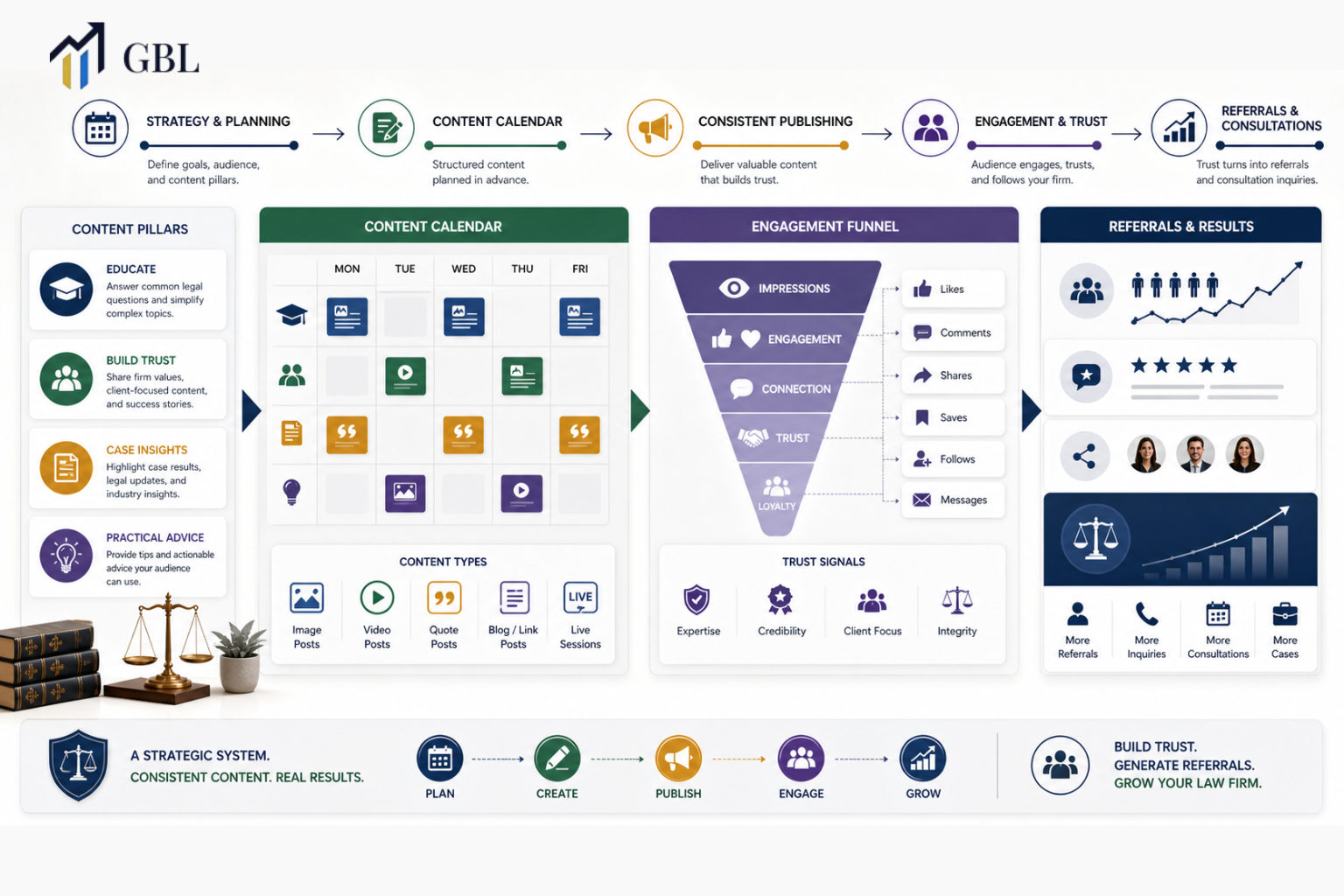
TL;DR
- Law firm social media marketing must focus on referrals, not likes
- Random posting leads to weak results
- A structured content calendar improves consistency
- Content should build trust and authority
- Different content types serve different goals
- Referral-driven content creates real opportunities
- Strategy turns visibility into consultations
Introduction
Most law firms post on social media without seeing results.
They stay active, but nothing changes.
In law firm social media marketing, the problem is not effort. It is structured. Posting without a clear plan leads to inconsistent engagement and missed opportunities. Social media should do more than just increase exposure. It should build trust, strengthen your brand, and generate referrals. Without a content calendar aligned with these goals, your efforts remain scattered and ineffective.
At GBL, we approach social media as a system, not an activity. Every post is planned with a purpose, aligned with your services, and designed to move potential clients from awareness to trust to referral. Instead of random content, you get a structured content calendar that builds authority and turns visibility into real consultation opportunities.
Why Random Posting Fails to Generate Referrals
Random posting creates activity, but it does not create results. It may feel like progress because content is being published, but without a clear direction, that effort does not lead to meaningful outcomes. In law firm social media marketing, every post should serve a purpose. When content is created without a plan, it becomes disconnected from your overall goals and fails to support growth.
Many law firms treat social media as a checklist. They post occasionally, share general updates, or publish content based on what seems useful at the moment. However, this approach lacks consistency and alignment. Without a clear strategy, content does not speak to a specific audience or address real client concerns. As a result, it fails to build trust or encourage users to recommend your firm to others.
Another key issue is that random content does not create momentum. Social media works best when messages are repeated and reinforced over time. When posts are inconsistent or unrelated, users do not develop familiarity with your firm. This reduces recognition and limits the chances of referrals. A structured approach ensures that each piece of content supports the next, building a stronger and more reliable presence.
Real Law Firm Example
One firm posts random updates with no clear plan. Their content varies in topic and tone, making it difficult for users to understand what the firm stands for. Engagement remains low, and referrals do not increase.
Another firm follows a structured content calendar. Each post is aligned with specific goals, such as educating clients, building trust, or encouraging sharing. Over time, their content becomes more recognizable and valuable, leading to stronger engagement and more referrals.
Key Points
- Random posting limits overall impact
- Lack of strategy reduces engagement
- Content without direction fails to connect
- Inconsistency weakens brand recognition
- Structured planning improves referral potential
This is where most firms fail. They focus on posting content instead of building a system. When social media is treated as a strategy rather than an activity, it becomes a powerful tool for generating consistent referrals and long-term growth.
How a Structured Content Calendar Builds Consistency and Trust
A content calendar creates structure, and structure builds trust over time. In law firm social media marketing, consistency is one of the most important factors for long-term success. Without a clear plan, posting becomes irregular and disconnected. This makes it difficult for your audience to recognize your firm, understand your message, or develop confidence in your services.
A structured content calendar solves this problem by bringing organization and direction to your efforts. It ensures that every post is planned in advance and aligned with specific goals. Instead of reacting and posting randomly, you follow a system that covers key topics, addresses common client concerns, and reinforces your expertise. This creates a more reliable and professional presence across your social media platforms.
Consistency also plays a major role in how users perceive your firm. When people see regular, valuable content, they begin to associate your brand with reliability and authority. This frequent exposure eventually fosters familiarity, and familiarity breeds trust. Trust is what encourages users to engage with your content, recommend your firm to others, and eventually reach out for help.
Real Law Firm Example
One firm posts inconsistently, sharing content only when time allows. Their messaging changes frequently, and users do not develop a clear understanding of what the firm offers. Engagement remains low, and trust does not build over time.
Another firm follows a structured content calendar. Each post is planned and aligned with a clear purpose. Their messaging remains consistent, and their audience begins to recognize and trust their brand. As a result, engagement improves, and referrals increase.
Key Points
- Planning improves consistency and clarity
- Regular posting builds trust over time
- Structure creates a reliable content system
- Alignment ensures each post has purpose
- Consistency strengthens brand recognition
This is where consistency becomes powerful. Most law firms underestimate the impact of structured planning. When your content is organized and aligned with your goals, it becomes more than just activity. It becomes a system that builds trust, strengthens your brand, and supports long-term growth.
What Content Types Drive Referrals for Law Firms
Not all content creates referrals, even if it generates views or engagement. Some content types are far more effective because they build trust, provide value, and encourage users to share your message with others. In law firm social media marketing, the goal is not just to post content but to create content that positions your firm as helpful, reliable, and worth recommending.
High-performing content usually focuses on client education, case insights, and practical advice. Educational content answers common legal questions and helps users better understand their situation. This builds trust because it shows your firm is willing to provide value before asking for anything in return. Case insights give users a real-world perspective on how legal issues are handled, which increases credibility and confidence in your expertise. Practical advice makes your content actionable, helping users feel more prepared and informed.
These types of content also perform well because they are shareable. When users find content helpful or relevant, they are more likely to share it with friends, family, or colleagues who may need legal help. This is how referrals begin. In contrast, low-value content that focuses only on promoting your services often fails to engage users and rarely gets shared.
Real Law Firm Example
One firm focuses mainly on promotional posts, highlighting their services without providing real value. While the content is consistent, it does not resonate with the audience, and referrals remain low.
Another firm shares educational posts, explains legal scenarios, and provides practical tips. Their content is useful and easy to understand, which encourages users to engage and share. Over time, this leads to more referrals and stronger brand recognition.
Key Points
- Educational content builds trust and credibility
- Case insights strengthen authority
- Practical advice increases engagement
- Valuable content encourages sharing
- Referral-driven content supports growth
This is where referrals begin. Most law firms focus on visibility instead of value. When your content consistently helps users and addresses real concerns, it becomes more than just information. It becomes a reason for people to recommend your firm to others.
How Law Firm Branding Impacts Social Media Performance
Branding shapes how people see your firm before they ever contact you. In law firm social media marketing, perception is created quickly, often within seconds of viewing your content. That perception determines whether someone engages with your posts, remembers your firm, or moves on without taking action.
Strong law firm branding creates consistency across everything you share. This includes visuals, tone of voice, messaging style, and overall presentation. When users see the same style repeatedly, it becomes familiar. Familiarity builds recognition, and recognition builds trust. Over time, this trust makes users more likely to engage with your content and recommend your firm to others.
Branding also helps simplify decision-making for potential clients. When your messaging is clear and consistent, users understand what your firm stands for and what services you provide. This reduces confusion and makes it easier for them to connect your content with their needs. In contrast, weak branding creates inconsistency. If your visuals, tone, or messaging change frequently, users struggle to recognize your firm. This reduces engagement and limits referral potential.
Real Law Firm Example
One firm uses different styles, tones, and visuals across its social media posts. Their content feels inconsistent, and users do not develop a clear understanding of the brand. As a result, engagement remains low, and referrals are limited.
Another firm maintains a consistent identity. Their visuals, messaging, and tone are aligned across all posts. Over time, users begin to recognize the brand and associate it with reliability and expertise. This leads to higher engagement and more referrals.
Key Points
- Branding builds recognition over time
- Consistency strengthens trust and familiarity
- Clear identity improves user understanding
- Visual clarity supports engagement
- Strong branding increases referral potential
This is where perception matters. Most law firms underestimate how much branding influences performance. When your brand is clear and consistent, your social media becomes more than just content. It becomes a recognizable presence that users trust, engage with, and recommend.
How to Align Social Media Content With Referral Intent
Content must connect to referrals.
This requires alignment.
In social media marketing for lawyers, content should be designed to encourage sharing and recommendations. This includes answering common questions, addressing concerns, and providing helpful insights.
When content aligns with user needs, it becomes more valuable and shareable.
Real Law Firm Example
One firm posts generic content. Another aligns content with client concerns. The second firm generates more referrals.
Key Points
- Alignment improves relevance
- Useful content encourages sharing
- Clear messaging builds trust
- Intent drives performance
This is where strategy works.
How Consistency Builds Authority in Lawyers and Social Media
Authority grows over time.
Consistency makes it possible.
In lawyers and social media, regular posting helps establish expertise. When users repeatedly see valuable content, they begin to trust your firm. This trust leads to more referrals and inquiries.
Inconsistent posting weakens this process.
Real Law Firm Example
One firm posts occasionally. Another post consistently. The second firm builds authority.
Key Points
- Consistency builds authority
- Repetition increases trust
- Regular content improves visibility
- Authority drives referrals
This is where long-term growth happens.
How to Turn Engagement Into Real Referrals and Consultations
Engagement is only the first step.
It must lead to action.
In law firm social media marketing, engagement should be guided toward referrals and consultations. This requires clear messaging, calls-to-action, and follow-up strategies.
Without this connection, engagement remains passive.
Real Law Firm Example
One firm gets likes but no leads. Another converts engagement into referrals. The second firm grows.
Key Points
- Engagement must lead to action
- Clear CTAs improve conversions
- Follow-up drives results
- Strategy connects steps
This is where results are created.
Frequently Asked Questions
- How often should law firms post?
Consistency matters more than frequency. - What content works best?
Educational and insight-driven content. - Can social media generate referrals?
Yes, when aligned with strategy. - Is branding important?
Yes, it builds trust and recognition. - What is the biggest mistake?
Posting without a clear plan.
Conclusion
Law firm social media marketing is not about staying active. It is about building a system that turns content into referrals. When your content calendar is structured, aligned, and focused on trust, your social media becomes a reliable source of growth.
CTA
If your social media is not generating referrals, the issue is not the platform but the strategy behind it. Most law firms post without a clear system in place, leading to inconsistent results. At GBL, we build structured content strategies designed to turn visibility into real opportunities. Instead of guessing what to post, you get a clear plan focused on growth and referrals. If you want your social media to generate consistent consultations, this is where it starts.