
Website Content for Lawyers: How Practice Area Pages, FAQs, and Blogs Work Together
TL;DR
- Website Content for Lawyers should function as a connected system
- Practice area pages target high-intent users
- Blogs build visibility and topical authority
- FAQs improve trust and user engagement
- Internal linking connects all content
- Structure improves rankings and conversions
- Strategic content drives consultations, not just traffic
Introduction
Many law firms create website content without a strategy.
They publish blogs, add service pages, and write FAQs separately.
The result is disconnected content that struggles to rank and convert. In reality, Website Content for Lawyers works best when every content type supports the others. Practice area pages, FAQs, and blogs should function together as a connected system that improves rankings, authority, and user trust. Without this structure, websites attract traffic but fail to generate consistent consultations.
How Website Content for Lawyers Builds a Structured SEO System
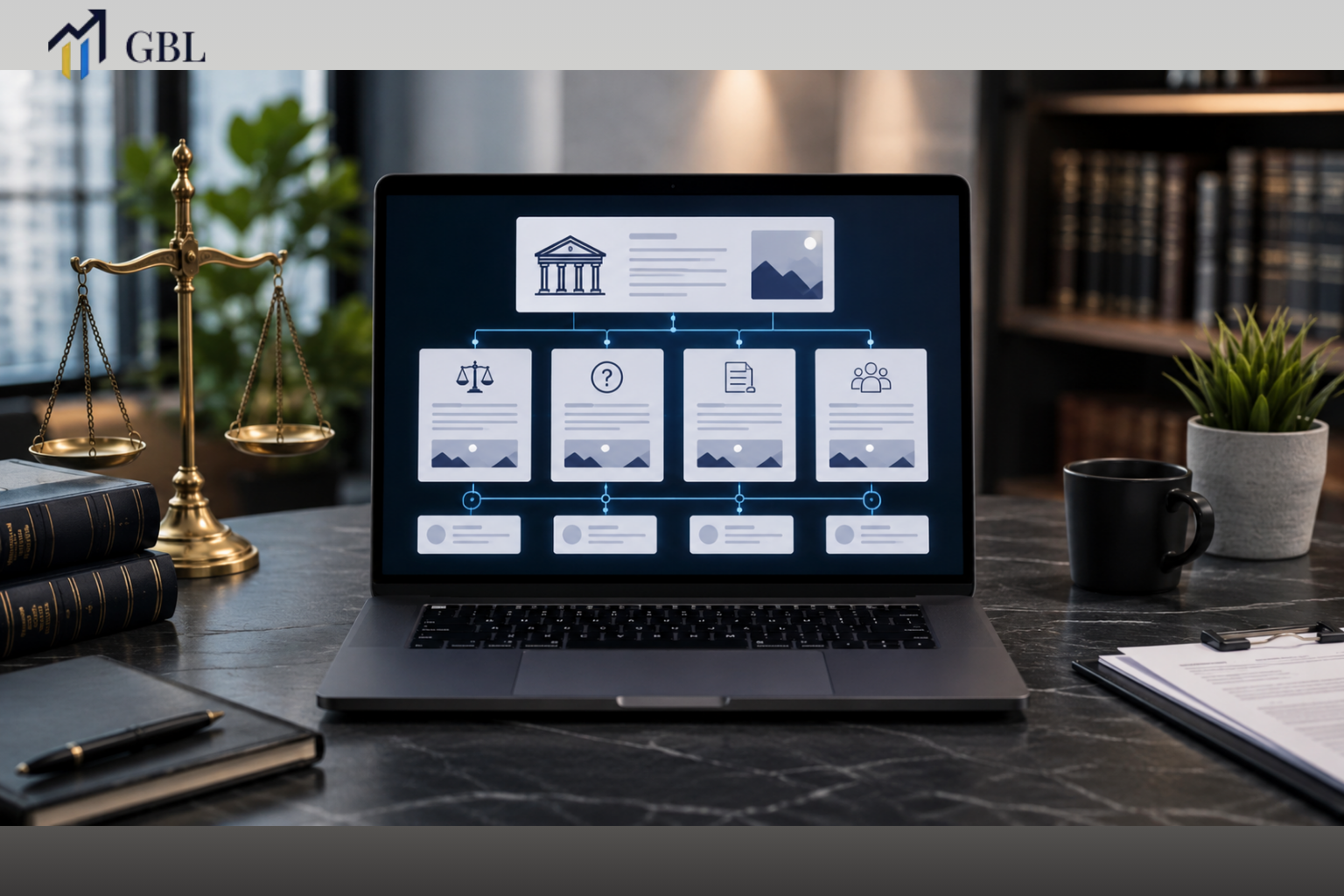
Content should never exist as separate pieces without direction. In Website Content for Lawyers, every page should support a larger SEO and conversion strategy. Practice area pages, supporting blogs, FAQs, and internal links should work together as one connected system. When content is structured properly, search engines can better understand your website, and users can move through information more naturally.
Many law firms create content without a clear framework. They publish blogs on random legal topics, add FAQs inconsistently, and build service pages without connecting them together. This creates isolated content that may generate some traffic but struggles to build authority or drive consultations. Search engines favor websites that demonstrate clear topical depth and strong content relationships. Without structure, it becomes harder to establish that authority.
A structured SEO system organizes content around specific practice areas and user intent. Practice area pages target high-intent searches from users looking for legal help. Supporting blogs answer related questions and expand visibility. FAQs reduce hesitation by addressing concerns directly. Internal links connect these pages, helping users and search engines understand how the content relates.
This structure also improves scalability. As more content is added over time, the website becomes stronger instead of more confusing. Each new page reinforces existing authority rather than competing against it. This creates a long-term growth system that improves rankings across multiple related searches.
Another major benefit is user experience. Structured websites feel easier to navigate because users can move naturally from informational content to service pages and then toward contacting the firm. This improves engagement and increases conversion potential.
Real Law Firm Example
One firm publishes disconnected blogs on random legal topics without linking them to service pages or organizing them into practice area clusters. Their rankings remain inconsistent, and traffic rarely turns into consultations.
Another firm builds a structured content system around its core practice areas. Service pages are supported by related blogs, FAQs, and strategic internal links. Over time, the website gains stronger rankings, improved authority, and a consistent increase in qualified leads.
Key Points
- Content should work as a connected system
- Structured websites improve rankings
- Connected pages strengthen topical authority
- Internal linking supports SEO growth
- Strategy improves scalability and conversions
This is where SEO becomes scalable. Most law firms focus on publishing more content instead of building a better structure. However, long-term SEO growth happens when every page supports a larger strategy. A connected content system creates stronger rankings, better authority, and more consistent consultations over time.
Why Practice Area Pages Are the Core of Website Content for Lawyers
Practice area pages are one of the most important parts of a law firm website because they directly connect your services to user intent. In Website Content for Lawyers, these pages act as the foundation of the entire SEO and conversion system. They are designed to target users who are actively searching for legal help and are often close to hiring a lawyer.
Unlike general blog traffic, practice area pages attract high-intent users. Someone searching for “personal injury lawyer,” “divorce attorney,” or “bankruptcy lawyer near me” is usually looking for immediate guidance or representation. This makes these pages far more valuable from a conversion perspective. If the structure or messaging is weak, the firm loses potential consultations even if traffic reaches the page.
Strong practice area pages combine SEO structure with conversion-focused communication. They should clearly explain the service, answer common concerns, and guide users toward the next step. Search engines also rely on these pages to understand what your firm does and which services you want to rank for. Well-structured pages improve visibility while building authority around specific legal topics.
Another important factor is trust. Detailed practice area pages help users feel informed and reassured. When a page explains the process clearly and addresses real client concerns, users are more likely to stay engaged and contact the firm. Generic pages with thin content often feel unhelpful and fail to create confidence.
Practice area pages also support the rest of the website content strategy. Blogs, FAQs, and internal links should reinforce these pages to strengthen topical authority and improve rankings over time.
Real Law Firm Example
One firm uses short and generic service pages with very little information about the legal process, client concerns, or next steps. While the website receives some traffic, users leave quickly because the pages feel incomplete and unhelpful.
Another firm creates detailed and structured practice area pages built around search intent and user experience. Each page explains the service clearly, answers important questions, and includes strong calls-to-action. As a result, the firm converts more visitors into consultations and improves rankings across multiple legal searches.
Key Points
- Practice area pages target high-intent searches
- Structured pages improve rankings and visibility
- Strong messaging increases conversions
- Detailed content builds trust and authority
- Service pages support long-term SEO growth
This is where consultations begin. Most law firms focus heavily on blogs while underestimating the importance of their core service pages. However, practice area pages are often the pages that turn search traffic into real case inquiries. When structured properly, they become one of the strongest drivers of long-term SEO and conversion growth.
How Blogs Expand Visibility and Build Topical Authority
Blogs play an important role in long-term SEO growth because they expand visibility beyond direct service searches. In Website Content for Lawyers, blogs help law firms rank for informational searches, related legal questions, and early-stage research queries that potential clients are actively searching online. This allows firms to reach users before they are ready to contact a lawyer and begin building trust earlier in the decision-making process.
Many legal users search for answers before searching for a law firm directly. They may ask questions about legal timelines, injury claims, divorce procedures, insurance disputes, or court processes. Strategic blog content allows law firms to appear for these searches and introduce users to the firm naturally. Over time, this creates more visibility across a larger group of keywords and search intents.
Strong blogs also help build topical authority. When multiple articles support a specific practice area, search engines begin to understand that the website has depth and expertise around that topic. A structured law firm content marketing strategy helps firms plan these blog clusters over time instead of publishing random topics without direction. This improves rankings not only for blog posts but also for the related practice area pages. Structured topic clusters create stronger authority signals than isolated articles published randomly.
Another important benefit is internal linking. Blogs can connect users to service pages, FAQs, and related resources. This strengthens the overall website structure while guiding users toward conversion-focused pages. Without internal linking, blogs often become disconnected pieces of content that provide little long-term SEO value.
Consistency also matters. Publishing strategic content regularly helps strengthen authority over time. A website that continuously expands around its practice areas becomes more competitive in search results and builds stronger visibility across multiple legal topics.
Real Law Firm Example
One firm publishes random blogs inconsistently without connecting them to specific practice areas or internal pages. Their rankings remain unstable, and the content generates little meaningful traffic.
Another firm creates structured topic clusters around core legal services. Blogs answer related client questions, support service pages, and connect through internal links. Over time, the website improves rankings across multiple keywords and builds stronger authority within its practice areas.
Key Points
- Blogs expand long-term search visibility
- Informational content builds topical authority
- Topic clusters strengthen SEO performance
- Internal linking improves authority flow
- Consistency supports sustainable growth
This is where visibility expands. Most law firms treat blogs as separate marketing pieces instead of strategic SEO assets. However, when blogs are structured around user intent and connected to core service pages, they become powerful tools for building authority, improving rankings, and generating long-term organic growth.
Why FAQs Reduce Hesitation and Improve Engagement
Users have concerns before contacting a lawyer.
FAQs reduce uncertainty.
In Website Content for Lawyers, FAQ sections answer common concerns directly. They improve user experience by providing quick answers and reducing hesitation during the decision-making process.
FAQs also help support semantic SEO and featured snippet opportunities.
Real Law Firm Example
One firm ignores FAQs entirely. Another integrates FAQs across service pages and blogs. The second firm improves engagement and conversions.
Key Points
- FAQs improve user experience
- Quick answers reduce hesitation
- Structured questions support SEO
- Clarity builds trust
This is where trust increases.
How Internal Linking Connects Website Content for Lawyers
Internal linking creates structure.
Structure strengthens authority.
In Website Content for Lawyers, internal linking helps search engines understand relationships between pages. It also guides users naturally through the website, helping them discover related information and services.
Without internal links, content loses strategic value.
Real Law Firm Example
One firm publishes pages without internal links. Another connects blogs, FAQs, and service pages strategically. The second firm improves rankings and user engagement.
Key Points
- Internal links improve authority
- Structure helps search engines
- User flow supports conversions
- Connected systems perform better
This is where content becomes strategic.
Why Random Content Publishing Fails to Generate Consultations
More content is not always better.
Random publishing creates weak performance.
In Website Content for Lawyers, publishing random blogs without connecting them to practice areas or user intent limits SEO growth. Traffic may increase slightly, but conversions remain weak because the content lacks direction.
Strategic content systems outperform random activity. This is where content marketing for lawyers becomes important because every page should support rankings, trust, and real consultation growth.
Real Law Firm Example
One firm publishes unrelated legal topics. Another aligns every piece with services and search intent. The second firm generates more qualified leads.
Key Points
- Random content weakens performance
- An intent-driven strategy improves ROI
- Alignment supports conversions
- Systems outperform isolated pages
This is where most firms lose momentum.
How Website Content for Lawyers Supports Mobile User Behavior
Legal users search quickly.
Mobile structure matters.
In Website Content for Lawyers, content must be easy to navigate on mobile devices. Users often scan pages while looking for immediate answers. Clear headings, structured sections, and fast-loading pages improve engagement.
Mobile usability also impacts rankings directly.
Real Law Firm Example
One firm uses cluttered content layouts. Another structure pages clearly for mobile users. The second firm improves engagement and conversions.
Key Points
- Mobile structure improves usability
- Fast pages reduce bounce rates
- Clear formatting supports engagement
- Mobile UX impacts SEO
This is where usability matters.
How GBL Builds Website Content for Lawyers as a Growth System
Most agencies publish content.
GBL builds connected systems.
At GBL, Website Content for Lawyers is designed around rankings, authority, and case generation. Practice area pages, blogs, FAQs, and internal linking all work together as part of a larger SEO framework.
This creates predictable long-term growth instead of random traffic spikes.
Real Law Firm Example
One firm publishes disconnected content through a generic agency. Another works with GBL and builds a structured legal content system. The second firm improves visibility, trust, and consultations consistently.
Key Points
- GBL builds connected content systems
- Structure improves long-term SEO
- Content should support conversions
- Strategy creates scalable growth
This is where sustainable authority develops.
FAQs
- What is the most important website content for lawyers?
Practice area pages are the foundation. - Why do law firm blogs matter?
They build visibility and authority. - Should law firms add FAQs?
Yes, FAQs improve trust and engagement. - How does internal linking help SEO?
It strengthens structure and authority flow. - Why does content strategy matter?
Because disconnected content rarely converts.
Conclusion
Website Content for Lawyers should never function as isolated pages. Practice area pages, blogs, FAQs, and internal linking all work together to create authority, visibility, and conversions. When content is structured strategically, it becomes a scalable system that supports long-term SEO growth and consistent case generation.
CTA
If your website content feels disconnected or ineffective, the issue is usually not the amount of content. It is the lack of structure behind it. Most law firms publish pages without building a connected SEO system. At GBL, we create strategic content frameworks designed specifically for law firms. Every page, blog, FAQ, and internal link is built to improve rankings, strengthen authority, and generate more qualified consultations over time.