
Lawyer Website Development: How to Brief Your Developer So Nothing Gets Lost in Translation
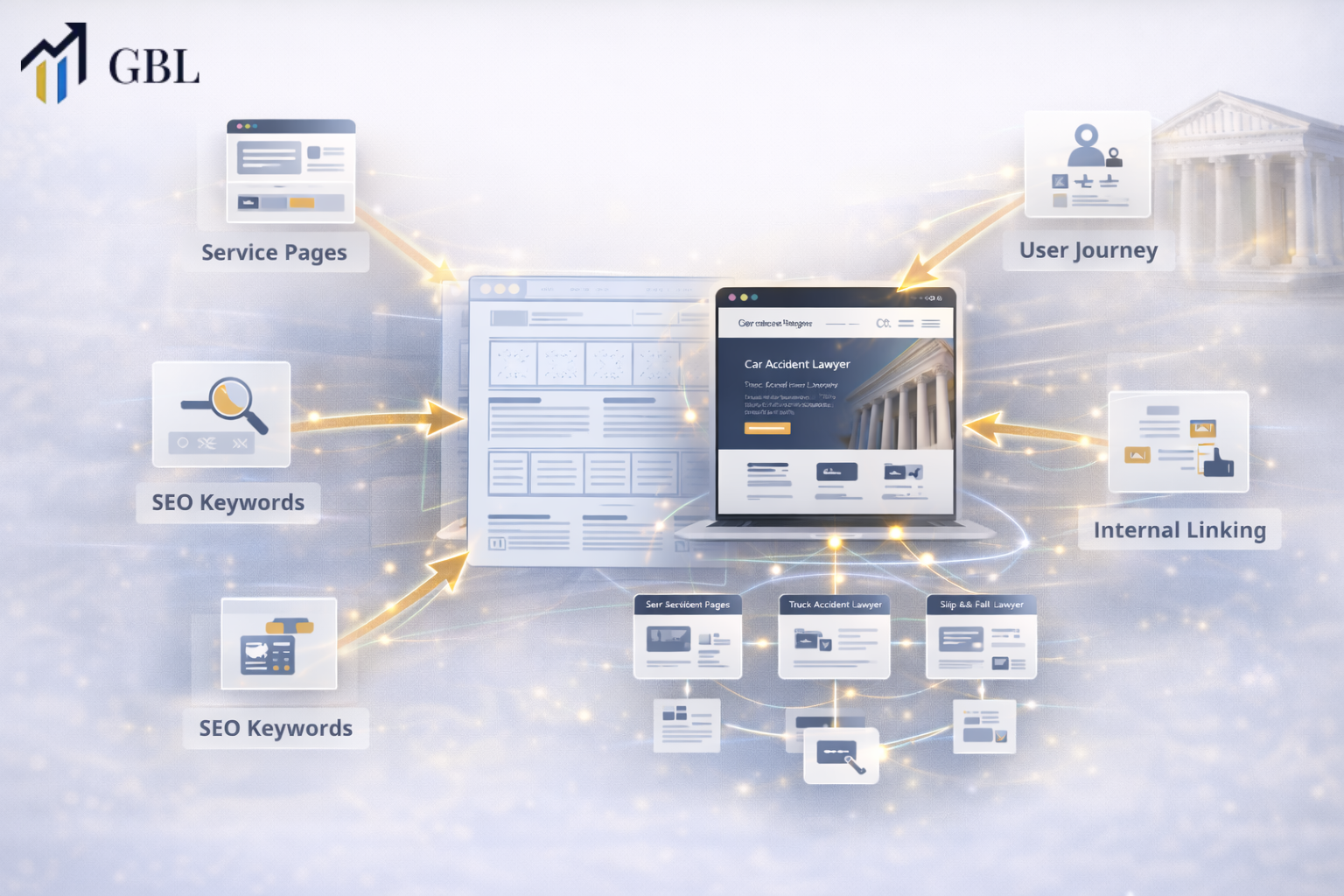
TL;DR
- lawyer website development fails when communication is unclear
- Most law firms give vague instructions to developers
- A weak brief leads to poor structure, SEO, and conversions
- Developers build what they are told, not what you need
- Clear planning improves rankings and lead generation
- Structure and user flow must be defined before development
- A strong brief turns your website into a growth system
Introduction
Most law firms hire a developer and expect results.
They explain what they want, share a few examples, and assume everything will come together. But when the website is finished, something feels off. It looks fine, but it does not rank, does not convert, and does not bring in cases.
The problem is not the developer. It is the communication.
Lawyer website development depends heavily on how clearly you define your expectations. If your brief is vague, your website will be too. A clear and structured brief ensures your site is built for SEO, user flow, and conversions from the start.
Why Most Law Firm Websites Fail Due to Poor Developer Briefs
Most law firms do not realize how important the briefing stage is. They assume the developer will understand what they need and fill in the gaps. In reality, developers follow instructions. If those instructions are unclear, the final result will reflect that.
A weak brief usually focuses on design instead of performance. Firms talk about colors, layouts, and examples, but they do not explain structure, SEO, or user flow. This leads to websites that look professional but fail to generate leads.
Real Law Firm Example
A law firm tells a developer they want a “modern website like competitors.” The developer builds a visually similar site but without proper structure or SEO. Another firm provides a clear brief with service pages, content plan, and internal linking. The second firm sees better results.
Key Points
- Vague instructions lead to weak results
- Developers follow what they are told
- Design-focused briefs ignore performance
- Missing structure affects SEO
A website is only as strong as the plan behind it.
Most law firms get this wrong, and that is where their growth stops before it even begins.
What Developers Actually Need From Law Firms to Build a High-Performing Website
Developers are responsible for building your website, but they rely on your input to do it correctly. Without clear direction, they cannot create a site that supports your business goals.
A strong brief should explain what your website needs to achieve, not just how it should look. This includes your services, target audience, and how users should move through the site.
Real Law Firm Example
One firm provides only visual references. Another firm shares a full structure with pages, content, and user flow. The second firm gets a website that performs better because the developer has clear guidance.
Key Points
- Define business goals
- Outline services clearly
- Explain user journey
- Include SEO requirements
Clear communication leads to better execution.
Most law firms assume developers will handle strategy, but that is rarely the case.
How to Define Website Structure Before Development Begins
Website structure is the foundation of everything your site will do. It decides how your pages are arranged, how users move from one section to another, and how search engines understand your services. Even when using Law Firm Website Builders, without a clear structure, a website can feel confusing and fail to perform.
Before development begins, you need to plan how your website will be organized. Each service should have its own dedicated page, and each of those pages should be supported by related content that explains common questions, situations, and details. This creates a clear path for both users and search engines, making your website easier to navigate and easier to rank.
A strong structure also improves user experience. When visitors land on your site, they should quickly understand what you offer and where to go next. If they feel lost or have to search too hard for information, they will leave. Clear structure removes that friction and guides them naturally toward taking action, something that many Law Firm Website Builders struggle to support without proper planning.
Real Law Firm Example
One law firm builds a website without planning its structure, relying only on templates from Law Firm Website Builders. Pages are created randomly, services are grouped together, and there is no clear connection between content. Users struggle to find what they need, and the site does not rank well.
Another firm takes the time to map out its structure before development. Each service has its own page, supported by blogs and connected through internal links. Over time, this website ranks higher, keeps users engaged, and converts more visitors into clients.
Key Points
- Create a clear and logical page hierarchy
- Separate each service into its own focused page
- Plan supporting content around each service
- Use internal links to connect related pages
- Make navigation simple and easy to follow
Structure is what makes your website work as a system. It supports SEO, improves user experience, and increases conversions. Without it, your website becomes a collection of pages instead of a tool that drives results.
Most law firms skip this step because they want to move fast. But without proper structure, even when using Law Firm Website Builders, they end up facing problems later, including low rankings, poor engagement, and missed opportunities for new cases.
How to Include SEO Requirements in Your Developer Brief
SEO must be included from the start. It cannot be added after development is complete.
Your brief should clearly define how each page will be optimized and how content will support rankings.
Real Law Firm Example
A firm launches a website without SEO planning and struggles to rank. Another firm includes SEO requirements in the brief and sees better results after launch.
Key Points
- Assign keywords to pages
- Plan content structure
- Ensure internal linking
- Optimize technical setup
SEO is not optional. It is essential for growth.
Most law firms treat SEO as an afterthought, which limits their results.
How to Define User Flow So Your Website Converts
User flow determines how visitors move through your website. Without it, users feel lost and leave without taking action.
Your brief should clearly define how users go from landing on your site to contacting your firm.
Real Law Firm Example
A firm builds a site with no clear flow. Users leave without converting. Another firm designs a guided journey. The second firm generates more leads.
Key Points
- Guide users step-by-step
- Use clear calls-to-action
- Reduce confusion
- Build trust through content
User flow is what turns visitors into clients.
Most law firms overlook this, which reduces conversions.
The GBL Framework for Lawyer Website Development That Drives Results
At GBL, we treat website development as a strategic process. Every step is planned to ensure the final website performs effectively.
We focus on structure, SEO, and conversion from the beginning.
Real Law Firm Example
A firm follows a structured development approach and launches a site that ranks and converts. Over time, results improve.
Key Points
- Strategy-first planning
- SEO integration
- Conversion-focused design
- Clear communication
Explore our law firm website design services here to learn more about how this works.
This system ensures your website works as a growth tool.
Most law firms never implement this level of strategy.
What Results Law Firms Can Expect From Properly Planned Development
When your website is built with a clear brief, results become predictable. Your site ranks better, attracts more traffic, and converts more visitors.
The difference is not just design. It is clear.
Real Law Firm Example
A firm improves its briefing process and sees better performance after launch. Rankings increase, and leads grow.
Key Points
- Better rankings
- More traffic
- Higher engagement
- Increased inquiries
- Consistent case flow
This is the outcome of proper planning.
Most law firms never reach this stage because their process is unclear.
Frequently Asked Questions
- What is lawyer website development?
It is the process of planning and building a website for a law firm. - Why is briefing important?
It ensures the developer understands your goals and builds the right structure. - Can SEO be added later?
It is better to include SEO from the beginning. - What is user flow?
It is how users move through your website toward taking action. - Why do websites fail?
Most fail due to poor planning and unclear communication.
Conclusion
Lawyer website development is not just about building a website. It is about creating a system that supports SEO, guides users, and generates leads. When your brief is clear and structured, your website becomes a powerful tool for growth instead of just an online presence.
CTA
If your website is not delivering results, the issue may not be your developer but the process behind the project. Many law firms start development without a clear strategy, which leads to websites that look good but fail to perform. At GBL, we take a structured approach to lawyer website development, ensuring that every part of your site is built for rankings, user flow, and conversions. Instead of relying on guesswork, you get a system designed to generate consistent results. If you want a website that actually brings in cases, this is where it starts.