
TL;DR
- Local SEO for lawyers determines which firms receive calls when legal intent is highest.
- Google ranks law firms locally based on entity trust, relevance, and consistency.
- Google Business Profile, citations, reviews, and website structure must reinforce the same signals.
- Most firms fail because they treat local SEO as tasks instead of infrastructure.
- When executed correctly, local SEO becomes a stable and predictable client acquisition channel.
Your Next Client Is Not Searching for Just Any Lawyer
They are searching for “the best lawyer near me.”
That search usually happens under pressure.
An accident. A legal notice. A personal dispute.
At that moment, potential clients are not evaluating credentials in depth. They are scanning Google results, checking map listings, reading a few reviews, and calling the firm that looks credible, available, and local.
If your law firm does not appear prominently during that moment, your experience and results do not matter. You are invisible when intent is highest.
If your firm is already investing in a website, reviews, or Google Business Profile but still struggles to show up consistently, the issue is rarely effort. It is usually misaligned local trust signals.
Local SEO for lawyers exists to control that moment of visibility.
Not traffic. Real decisions.
Better Business for Lawyers focuses exclusively on helping law firms build predictable growth through SEO-driven legal marketing.
What Local SEO for Law Firms Really Means in 2026
Local SEO for law firms is not about ranking a single page or simply inserting city names into content.
It is about proving to Google that your firm is:
- A legitimate legal entity
- Actively operating in a defined geographic area
- Trusted by clients and third-party platforms
- Relevant for specific legal services in that location
Google evaluates this through signal alignment.
Your website, Google Business Profile, citations, reviews, and technical structure must all confirm the same facts.
When those signals align, rankings stabilize. When they conflict, visibility becomes inconsistent or never materializes.
This local visibility strategy works best when integrated into a broader law firm marketing framework focused on predictable growth.
Why Legal Searches Behave Differently Than Other Local Searches
Legal searches involve risk. Choosing the wrong lawyer can have serious financial or personal consequences.
Because of this, Google applies stricter trust thresholds to law firms.
Far stricter than most local businesses.
Small issues that other industries can survive often suppress legal rankings:
- Minor NAP inconsistencies
- Over-optimized Google Business Profiles
- Generic service descriptions
- Thin or duplicated location pages
This is why generic local SEO advice routinely fails for law firms.
Local SEO for law firms requires higher accuracy, stronger validation, and fewer errors.
Proximity, Trust, and Intent Drive Local Clicks
Local rankings are driven by three forces working together.
Proximity determines eligibility. You must be close enough to appear.
Trust determines consistency. Google must feel confident showing your firm repeatedly.
Intent determines clicks. Your listing must clearly match the legal need.
Proximity alone does not guarantee visibility.
Trust without relevance does not convert.
Intent without credibility does not sustain.
Effective local SEO for law firms aligns all three.
How Google Actually Decides Which Law Firms Rank Locally
Google does not rank law firms based on keywords alone.
It evaluates law firms as entities.
That means Google cross-checks signals from:
- Your website
- Your Google Business Profile
- Legal directories
- Review platforms
- Local citations
If those sources confirm the same identity, services, and location, confidence increases. If they conflict, rankings stall.
This is why some firms with strong websites and many reviews still fail to rank locally. Google is not missing your firm. It is hesitating to trust the signals it sees.
Google Business Profile as a Primary Local Authority Signal
Your Google Business Profile is not a listing.
It is your strongest local ranking signal.
Verification confirms existence. Rankings depend on:
- Correct primary and secondary categories
- Accurate service alignment
- Ongoing profile activity
- User engagement signals
A verified but neglected profile rarely performs in competitive legal markets. If your Google Business Profile exists but does not reliably generate calls, rankings are not the real problem. Signal confidence is.
We help law firms identify exactly which local signals weaken trust and how to correct them without guesswork.
Choosing the wrong primary category or inflating services can suppress visibility regardless of reviews or proximity. Every change should increase Google’s confidence that your firm is a legitimate local legal authority.
For firms that want execution handled correctly, local SEO and Google Maps optimization must be treated as a unified system.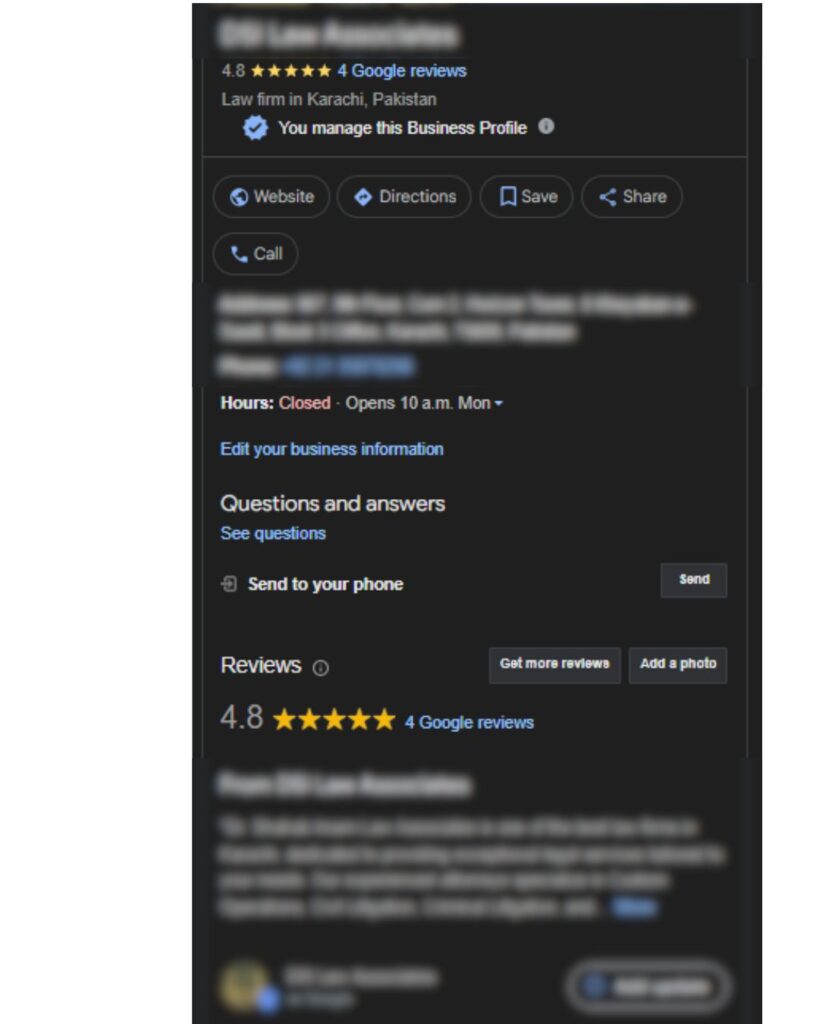
Local Keyword Research for Lawyers
Local keyword research is not about collecting terms.
It is about mapping intent to outcomes.
Many law firms chase keywords that generate impressions but never produce calls. That is not a traffic issue. It is an intent mismatch.
Identifying True Local Intent vs Research Queries
Local intent searches indicate urgency and readiness to contact a lawyer.
Research queries indicate education.
Senior practitioners separate these early because informational traffic inflates metrics without driving revenue. Effective local SEO marketing for lawyers prioritizes intent over volume every time.
Mapping Keywords to Practice Areas and Locations
Each practice area and city combination sends a relevance signal.
One generic location page weakens authority.
Too many thin pages cause cannibalization.
The correct structure uses:
- Strong, focused practice area pages
- Limited, intentional location pages
- Clear internal linking between them
This allows local SEO for law firms to scale without breaking trust.
Who Local SEO Actually Works For
Local SEO delivers predictable results for law firms that:
- Operate from real, verifiable office locations
- Focus on specific practice areas instead of generic coverage
- Maintain consistency across listings and reviews
- Are willing to fix structural issues instead of chasing shortcuts
Firms looking for instant rankings or automated tactics often struggle to maintain visibility in competitive legal markets.
Technical SEO Foundations That Enable Local Rankings
Technical SEO does not directly place a law firm in the map pack.
It removes friction that silently limits visibility over time.
In legal SEO, technical issues rarely cause penalties. They create ranking ceilings.
Location Pages, Internal Linking, and Site Structure
Location pages should serve real geographic intent, not exist for keyword coverage.
Strong pages:
- Contain unique service context
- Reflect actual office locations
- Are internally linked with intent, not automation
Internal linking connects:
- Practice area pages
- Location pages
- Core authority content
This improves crawl clarity, relevance signals, and authority flow.
Mobile Experience and Performance for Local Search
Most local legal searches happen on mobile devices.
Google tracks how users behave after clicking from:
- Google Maps
- Local pack results
- Branded searches
Slow load times, intrusive popups, or poor mobile layouts reduce engagement. Over time, these behavioral signals weaken local performance.
Law firm websites do not need to be complex.
They need to be fast, readable, and conversion-clear.
Local Citations and Listings as Authority Confirmation
Citations are not a growth tactic.
They are a verification layer.
Google uses citations to confirm that your law firm:
- Exists at a specific location
- Operates under a consistent identity
- Is recognized by authoritative third-party sources
What Citation Consistency Signals to Google
Consistency signals confidence.
When your firm’s name, address, and phone number match across authoritative platforms, Google becomes more confident showing your firm repeatedly.
Inconsistencies create hesitation and suppress rankings.
Quality vs Quantity in Legal Listings
Legal SEO does not reward volume.
It rewards accuracy and relevance.
A small number of authoritative legal citations outperform dozens of generic directory listings. Mass submissions often introduce formatting errors that are difficult to unwind later.
Online Reviews as Ranking and Conversion Multipliers
Online reviews influence local SEO for law firms in two ways:
- Algorithmic trust
- Human decision-making
How Reviews Influence Rankings and Click Behavior
In competitive legal markets, review quality and recency often matter more than total count.
Google looks for:
- Ongoing review activity
- Natural language patterns
- Professional responses from the firm
A firm with fewer recent reviews often outperforms one with many outdated reviews.
Building a Review Strategy That Works Long Term
Successful firms do not chase reviews.
They systemize them.
Effective strategies:
- Ask at the right point in the client journey
- Maintain consistency instead of spikes
- Respond professionally to all feedback
Consistency builds compounding trust. Spikes create volatility.
FAQs
How to optimize Google My Business listing for a law firm?
Choose the correct primary category, list only real legal services, and keep your profile accurate and active. Consistency and relevance matter more than frequent updates.
How to evaluate online reviews for law firms before hiring?
Look for recent, detailed reviews that mention communication and outcomes, not just star ratings. Consistent feedback matters more than total review count.
Local SEO for personal injury lawyers: does it work differently?
Yes. Personal injury SEO is more competitive and trust-sensitive, requiring stronger reviews, cleaner citations, and precise Google Business Profile optimization.
What legal marketing platforms provide local SEO features for attorneys?
Some legal marketing platforms offer citation, review, and profile management tools, but results depend on correct setup and ongoing strategy.
What are cost-effective local SEO services tailored for small law firms?
Focus on Google Business Profile optimization, citation accuracy, and review generation. Fewer actions done correctly outperform large campaigns.
Which platforms offer local citation building services for attorneys?
Use platforms that prioritize legal directories and authoritative local sources. Avoid mass submissions that introduce listing errors.
How can lawyers improve their local search rankings effectively?
Improve rankings by aligning Google Business Profile accuracy, citations, reviews, and website structure. Consistency beats short-term tactics.
Conclusion
Local SEO for lawyers is not a checklist.
It is infrastructure.
When visibility, trust, and intent align, local SEO becomes predictable instead of volatile.
Law firms that approach it strategically build a compounding advantage.
Firms that treat it as a series of tasks struggle to maintain consistent results.
If your law firm is not consistently visible in Google Maps and local search results, opportunities are often being missed at the moment intent is highest.
Our team provides local SEO and Google Maps optimization for law firms.
The focus is simple: trust signals, stable visibility, and predictable lead generation.