
Why Most Law Firm SEO Fails in 2026: The Real Reasons Behind Not Ranking
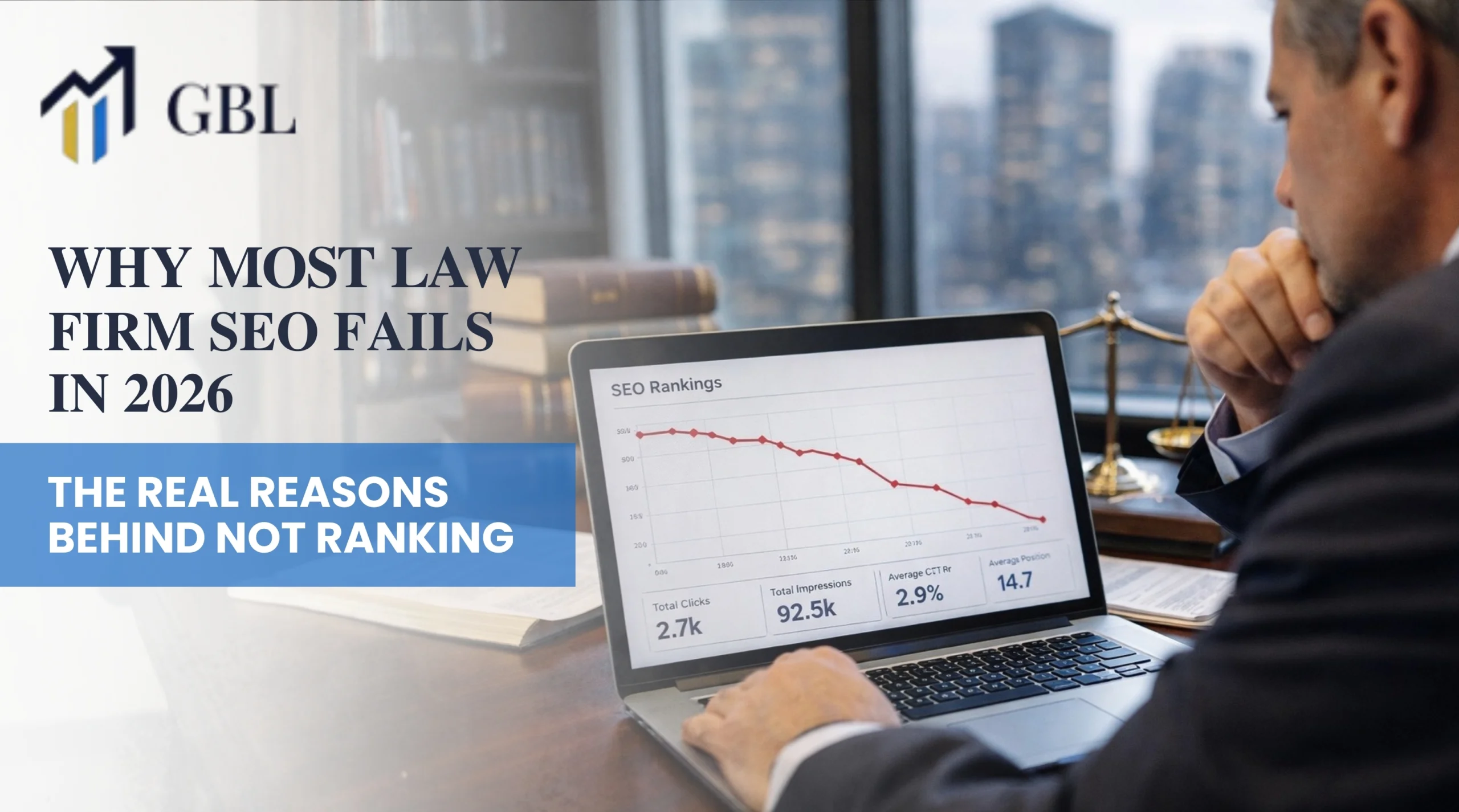
If you have ever wondered why most law firm SEO will fail as we speed toward 2026, you are not alone. Partners call us daily, frustrated that they are buried on page three of Google while competitors dominate the map pack. The truth is chilling yet liberating: rankings collapse for predictable reasons that you can fix once you understand them. In this in-depth guide, we will dissect those reasons, reference prior insights from our Legal Content Strategy series, and map a sustainable path to visibility, credibility, and consistent caseload growth—anchored in a practical law firm marketing strategy you can actually execute.
The E-E-A-T Gap: Experience, Expertise, Authority, Trust
Want a step-by-step plan to turn attorney experience into authority content? Our law firm content marketing framework includes examples, schemas, and formats that reinforce E‑E‑A‑T.
Search engines now treat legal queries as “Your Money or Your Life” issues. That means Google’s raters demand overwhelming proof of Experience, Expertise, Authoritativeness, and Trustworthiness. Firms still pushing thin bios, boiler-plate practice pages, or syndicated blog feeds are invisible because the algorithm sees a credibility vacuum. To close the gap, showcase first-hand courtroom victories, link to peer-reviewed publications, highlight bar memberships, and embed authentic video testimonials. This isn’t fluff marketing—it is the digital DNA that convinces both prospects and Google that you truly know the law and have practiced it successfully.
Inject demonstrable experience everywhere. Instead of writing “We handle car accidents,” describe how you secured a $2.1 million verdict last quarter, outline local statute §5103, and explain the filing deadline at the county courthouse. That level of practitioner insight is impossible to fake and elevates your content above AI-generated copy.
Hyper-Local Search Intent: Owning the Neighborhood, Not the City
For a deeper playbook on capturing neighborhood-level demand, start with our local SEO guide for law firms.
Search intent has splintered into micro-moments. A prospect no longer types “personal injury lawyer New York” but rather “bicycle accident attorney Cobble Hill with free consultation.” Law firms that still optimize for broad, statewide keywords lose to nimble practices that create laser-targeted landing pages for each suburb, zip code, and practice niche. Your Google Business Profile must mirror this granularity by listing distinct services—dog-bite claims, rear-end collision cases, wrongful death suits—each with keyword-rich descriptions (and if you need help, our Local SEO & Google Maps Optimization service does exactly this), geo-tagged photos, and steady review velocity.
Beyond GBP, cultivate consistent NAP citations on Avvo, FindLaw, SuperLawyers, Yelp, BBB, and the local Chamber of Commerce. Sponsor a Little League team, earn a backlink from the town newspaper, and co-host a podcast with a neighborhood realtor. These community signals feed Google’s “local entity graph,” proving you serve real clients in that exact location. Firms that ignore hyper-local SEO will find their visibility throttled by 2026’s even smarter algorithm updates.
Content That Serves Before It Sells
If you need help planning pillars and clusters that actually win cases, our law firm content marketing outline shows formats that earn links and trust.
Traditional law firm blogs overflow with 500-word rewrites of yesterday’s news. Google’s Helpful Content system now suppresses that noise. The remedy is topic depth, not volume. Create pillar guides such as “Complete Guide to High-Asset Divorce in Harris County” and cluster supporting articles around child custody modifications, QDRO taxation, and mediation timelines. This semantic structure signals comprehensiveness, keeps users on-site longer, and attracts natural links from journalists and community bloggers.
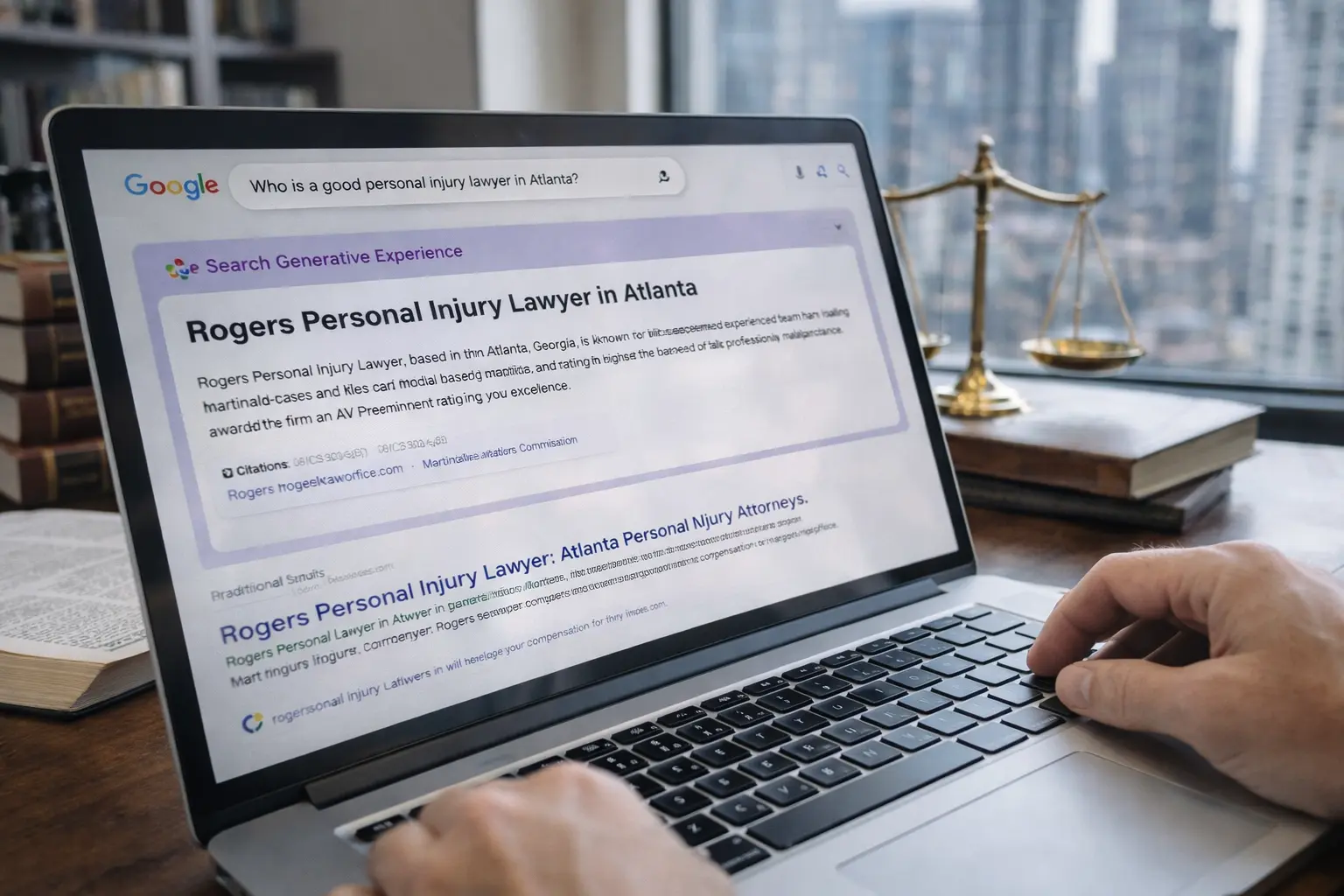
In 2026, SGE snapshots may answer a user’s query before they click, so structure every article with concise definitions, bullet lists, sub-head FAQs, and scannable takeaways. When the generative AI quotes sources, your firm should be the citation that earns both exposure and authority. Multimedia matters too: embed attorney-authored explainer videos, infographics on statute limitations, and audio clips summarizing deposition prep. Such assets satisfy different learning preferences and extend dwell time—both important user metrics for ranking.
Technical SEO & User Experience: The Invisible Power Couple
Great UX starts with a purpose-built site. See our approach to web design for law firms that ships fast, is SEO-ready, and converts.
Many partners assume SEO equals keywords plus backlinks, yet technical health forms the non-negotiable substrate of visibility. Core Web Vitals, mobile-first indexing, SSL encryption, canonical tags, and crawlable site architecture are baseline. A sluggish site losing two seconds during time-to-first-byte can shed 20 percent of potential leads. Audit your hosting stack, compress images, lazy-load videos, and use a content delivery network to satisfy Google’s speed mandate.
User experience (UX) ties directly to rankings. A prospect landing on a cluttered page with intrusive pop-ups will pogo-stick back to search results, signaling poor relevance. We recommend heat-mapping to identify friction points, simplifying navigation so each practice area is one click from the homepage, and integrating frictionless chat or call buttons. Remember, Google rewards pages that solve the user’s problem quickly and elegantly.
The SGE Disruption: Preparing for AI-First Search Results
Google’s Search Generative Experience is set to compress the organic real estate your firm once relied on. Instead of ten blue links, users will see a conversational answer box that cites a handful of sources. Securing those citations demands crystal-clear, authoritative answers marked with proper legal schema (Attorney, LegalService, FAQPage). Use structured data for verdicts, awards, and service areas to help the AI understand and surface your expertise.
Position every key paragraph to answer a single, high-intent question within 40-60 words. For example, “How long do I have to file a workplace injury claim in Illinois?” leads with the two-year statute, notes exceptions, then links to a deeper resource. This N-gram-rich snippet is exactly what SGE extracts. Provide external citations to statutes and government pages to enhance credibility and trust.
Ethical Link Building: From Link Schemes to Digital PR
Black-hat agencies once promised dozens of backlinks a week from private blog networks. Google’s 2025 and 2026 spam updates will deindex those tactics overnight, dragging your domain with them. Future-proof link earning revolves around digital PR: offer timely commentary on breaking case law to reporters, release proprietary data studies, and partner with universities on legal research. Each mention from a top-tier publisher feeds both Authority and Trust components of E-E-A-T. If you’re evaluating partners, here’s how the best SEO agencies help law firms rank without shortcuts.
Local partnerships compound this effect. Hosting a community seminar on expungement or sponsoring a pro bono clinic not only helps residents but also garners write-ups in municipal sites, legal nonprofits, and social media groups. Every authentic backlink serves as a vote of confidence that algorithms cannot fake and competitors cannot easily replicate.
Data-Driven Iteration: Turning Analytics into Advantage
We bake this iteration into every engagement—see our results-driven law firm SEO approach and how we measure what matters.
SEO is not one-and-done; it is continuous improvement. Monitor Search Console for query shifts, track conversion funnels in GA4, and examine call-tracking transcripts to detect unmet client questions. If “rideshare accident lawyer” impressions rise 40 percent quarter-over-quarter, spin up a dedicated practice page and supporting FAQs within days, not months. Agility is a ranking factor because freshness and topical authority often move in tandem.
Leverage heatmaps and session recordings to locate hesitation points—long forms, unclear CTAs, or jargon-heavy copy. Optimize micro-conversions: a fast-loading testimonial slider, a one-click case evaluation button, or an above-the-fold phone number. These small UX wins pile up into massive SERP wins because Google increasingly proxies user satisfaction as a quality signal.
Operational Alignment: Marketing, Intake, and Client Experience
Even the best SEO fails if intake staff miss calls or respond slowly to chat leads. Align marketing metrics with operational KPIs—call answer rate, form-response speed, retained-case ratio—and coach your team accordingly. This holistic view, a core pillar of Better Business for Lawyers’ Business Coaching Program, ensures that ranking gains translate into revenue gains. Sustainable growth requires systems, not luck.
Document every touchpoint from first click to final invoice. Clients who feel informed and respected are far likelier to leave five-star reviews, generating the social proof that fuels both Local SEO and referral momentum. In 2026, the firms thriving online will be those whose marketing promise matches the real-world experience they deliver.
Action Plan: Future-Proof Your Law Firm SEO Today
- Conduct a technical and content audit within the next 30 days (or request one here).
- Rewrite or expand thin pages into comprehensive, experience-rich guides.
- Hyper-localize every practice page and secure consistent NAP citations.
- Launch a digital PR calendar to earn authoritative media backlinks.
- Train intake teams to convert increased traffic into signed retainers.
Implement this roadmap, and you will not only dodge the reasons most law firm SEO fails, but you will also build a competitive moat that compounds year after year.
Frequently Asked Questions
How long before I see ranking improvements?
Most firms notice measurable movement within 3–6 months, with compounding gains at 12 months.
Can I handle SEO myself with tools?
DIY tools help, but legal SEO’s complexity and E-E-A-T demands usually require specialized expertise.
Does posting daily blogs boost rankings?
Quality and relevance outweigh frequency; one authoritative guide beats thirty shallow posts.
What is the biggest SEO mistake law firms make?
Treating SEO as a project, not a process—neglecting continuous updates, testing, and optimization.