
Advanced Law Firm SEO: A Strategic Framework for “seo for law” in Your Market
TL;DR
- Strong seo for law requires structure, not random tactics
- Technical SEO creates the foundation for rankings
- Topical authority improves legal search visibility
- Local SEO drives high-intent consultations
- Internal linking strengthens legal authority
- Conversion optimization improves ROI
- Long-term SEO systems outperform short-term tricks
Introduction
Many law firms invest heavily in SEO but still struggle to generate a consistent stream of consultations.
The problem is usually not effort.
In most cases, the issue is the lack of a connected SEO framework. Strong seo for law is not just about publishing blogs or adding keywords. It requires technical SEO, content systems, local optimization, authority building, and conversion-focused structure working together.
Law firms competing successfully online are not relying on isolated tactics. They are building scalable SEO systems designed around rankings, trust, and long-term client acquisition.
How Technical SEO Creates the Foundation for SEO for Law
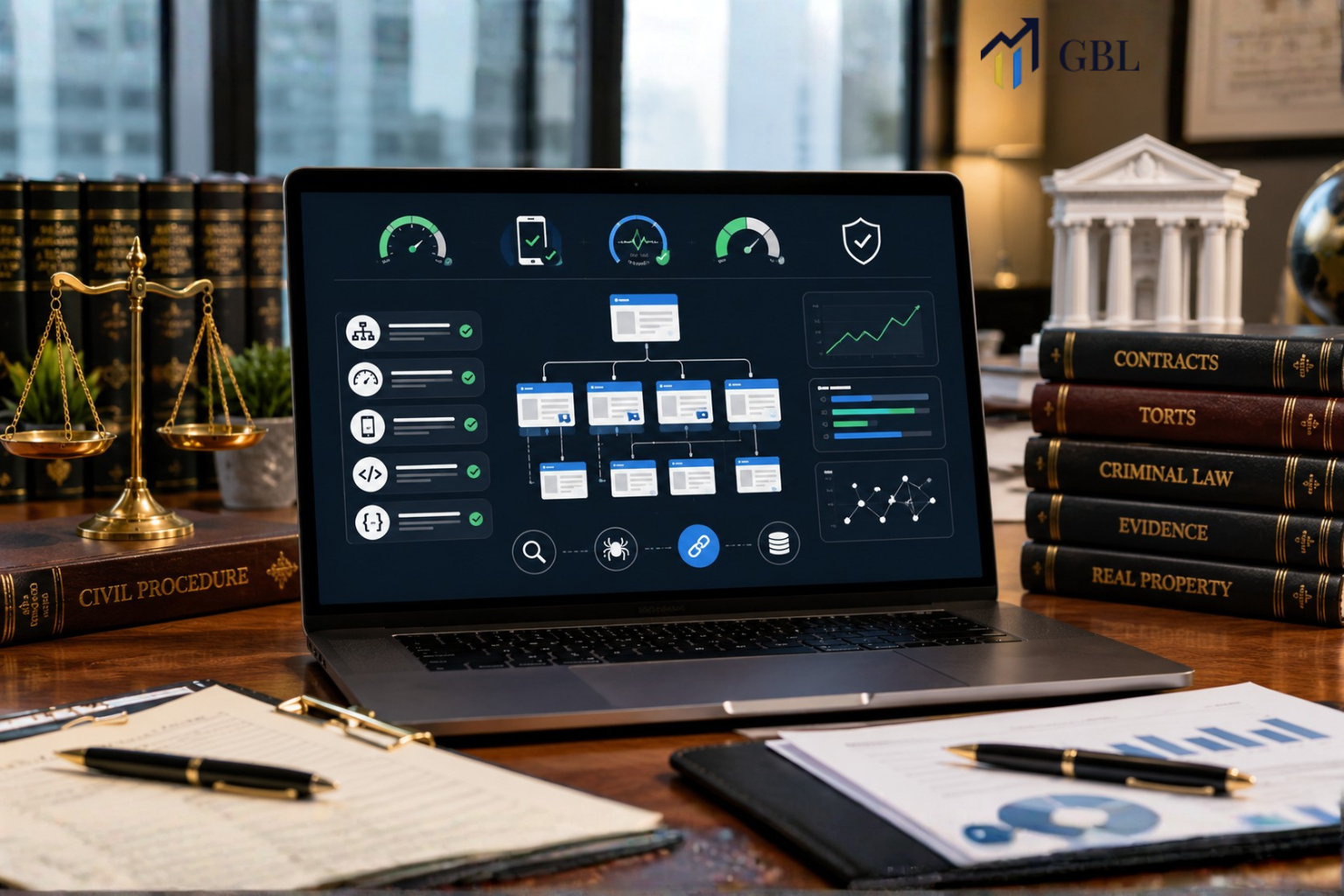
Strong SEO does not begin with content alone. It begins with a technical structure. In competitive legal markets, technical SEO creates the foundation that allows every other SEO effort to perform properly. Without a strong structure underneath the website, even high-quality content and aggressive marketing campaigns struggle to generate consistent rankings. This is why technical SEO is one of the most important parts of successful seo for law strategies.
Search engines need to crawl, understand, and organize website content efficiently. Technical SEO helps make this possible. Site speed, mobile usability, URL structure, page hierarchy, schema markup, internal linking, crawlability, and indexation all influence how search engines evaluate a law firm website. If these systems are weak, rankings become unstable and growth slows down over time.
Technical clarity also improves user experience directly. Legal users often search during stressful situations and expect information quickly. Slow-loading pages, broken navigation, confusing layouts, or poor mobile usability create frustration immediately. Many users leave the website before ever contacting the firm. Strong technical structure reduces these problems by creating a smoother and more organized experience.
Mobile usability is especially important because a large percentage of legal searches happen on mobile devices. A website that performs poorly on phones weakens both SEO rankings and conversions. Responsive layouts, readable content, fast loading speeds, and clear navigation help keep users engaged longer.
Internal linking is another major part of technical SEO. Practice area pages, blogs, FAQs, and local landing pages should connect naturally to strengthen topical authority and help users move through the website more efficiently. Search engines rely heavily on these structural signals to understand which pages are most important.
Scalability also depends on technical foundations. Law firms often expand their SEO strategy over time by adding practice area pages, supporting blogs, local pages, and educational resources. A poorly organized website becomes difficult to scale because the structure cannot support long-term growth efficiently.
Technical SEO is not simply a background task. It directly affects rankings, visibility, engagement, and consultation growth.
Real Law Firm Example
One law firm publishes large amounts of content on a slow and disorganized website with poor mobile usability and weak internal linking. Although the firm invests heavily in blogging, rankings remain inconsistent, and engagement stays low because the technical structure limits performance.
Another law firm improves technical SEO first before scaling content production. The website loads faster, navigation becomes clearer, internal linking strengthens authority flow, and mobile usability improves significantly. As a result, the second firm ranks faster, keeps users engaged longer, and scales more effectively over time.
Key Points
- Technical SEO improves indexing and crawlability
- Site structure directly impacts rankings
- Mobile usability improves engagement and trust
- Internal linking strengthens authority flow
- Strong foundations improve long-term scalability
This is where SEO performance begins. Many law firms focus heavily on content while ignoring the technical systems underneath the website. However, in seo for law, the technical structure determines how effectively search engines and users interact with the site. Strong foundations create stability, scalability, and long-term growth that support every future SEO effort more effectively.
Why Topical Authority Matters More Than Publishing Random Blogs
Search engines reward expertise.
Random publishing weakens focus.
In legal seo, law firms build stronger rankings when content is organized around specific practice areas and legal topics. Practice area pages, blogs, FAQs, and local pages should reinforce each other through internal linking and topic relevance.
Disconnected blogs create weaker authority signals.
Real Law Firm Example
One firm publishes unrelated legal articles with no structure. Another builds organized content clusters around practice areas. The second firm improves visibility across multiple legal searches.
Key Points
- Topic clusters improve authority
- Structured content strengthens relevance
- Internal links improve SEO signals
- Consistency improves scalability
This is where authority develops.
How Local SEO Drives High-Intent Traffic for Law Firms
Most people searching for legal help are not looking nationwide. They are searching for a lawyer close to their location who can solve their problem quickly. This is why local SEO plays such a major role in successful seo services for attorneys. Strong local visibility helps law firms appear in front of high-intent users who are actively searching for legal representation in specific cities, neighborhoods, or service areas.
Local SEO is different from general SEO because it focuses heavily on geographic relevance and trust signals. Google wants to show users the most relevant local businesses based on proximity, authority, reviews, and overall business credibility. For law firms, this means that Google Business Profile optimization, local landing pages, citation consistency, reviews, and Maps visibility all work together to influence rankings and consultation growth.
Google Maps results are especially important because many users contact law firms directly from Maps listings without even visiting the website first. A weak Google Business Profile with incomplete information, poor reviews, or inconsistent business details reduces visibility significantly. On the other hand, optimized profiles improve trust and increase engagement.
Localized service pages are another important part of a local SEO strategy. Strong law firm websites create location-focused pages connected to specific legal services and geographic areas. These pages help search engines understand where the firm operates while improving rankings for local legal searches.
Reviews also influence both rankings and conversions. Positive reviews strengthen credibility and reassure users during stressful legal situations. Many potential clients compare reviews before contacting a law firm, which means reputation management becomes part of local SEO performance as well.
Citation consistency matters too. Search engines compare business information across directories, legal listings, Maps platforms, and the website itself. Inconsistent names, phone numbers, or addresses weaken trust signals and hurt local rankings.
Local SEO also improves conversion quality because geographic searches usually carry stronger intent. Users searching for “divorce lawyer near me” or “personal injury attorney in Fort Lauderdale” are often closer to contacting a lawyer than users making broad informational searches.
Strong local SEO systems help law firms generate more consultations while improving visibility in competitive markets.
Real Law Firm Example
One law firm ignores local SEO almost entirely. The website lacks location-specific pages, Google Business Profile information is incomplete, and reviews remain inconsistent. As a result, the firm struggles to appear in Google Maps and receives limited local traffic.
Another law firm builds localized landing pages around key practice areas and geographic locations while optimizing its Google Business Profile, improving reviews, and strengthening citation consistency. The second firm appears more frequently in local search results and generates significantly more high-intent leads.
Key Points
- Local SEO improves Maps visibility
- Reviews strengthen trust and credibility
- Local pages support geographic rankings
- Citation consistency improves authority
- Geographic targeting improves conversions
This is where consultation growth accelerates. Many law firms invest heavily in general SEO while overlooking local optimization, even though most legal searches are location-driven. In seo services for attorneys, strong local SEO helps firms appear in front of users ready to hire nearby legal representation, making it one of the most powerful drivers of high-intent consultations and long-term visibility.
Why Internal Linking Strengthens SEO for Law Websites
SEO pages should support each other.
Connected systems rank better.
In law seo, internal linking helps search engines understand page relationships while guiding users naturally through the website. Practice area pages should connect to supporting blogs, FAQs, and related resources strategically.
Disconnected pages weaken authority flow.
Real Law Firm Example
One law firm publishes pages without internal links. Another builds structured linking systems connecting all major legal topics. The second firm improves rankings across multiple keywords.
Key Points
- Internal links strengthen authority
- Connected pages improve rankings
- User flow improves engagement
- Structure improves scalability
This is where SEO systems become stronger.
How Conversion Optimization Impacts SEO Performance and ROI
Traffic alone does not create revenue.
Conversions determine profitability.
Many law firms improve rankings but still struggle with consultations because the website lacks a conversion-focused structure. In seo for law, user experience, trust signals, calls-to-action, attorney credibility, and consultation flow all influence lead generation.
SEO should support business growth directly.
Real Law Firm Example
One law firm increases traffic but sees weak lead generation. Another improves consultation flow, trust-building, and conversion UX alongside SEO. The second firm improves ROI significantly.
Key Points
- Traffic alone is incomplete
- Conversion systems improve ROI
- UX impacts consultation rates
- Trust signals strengthen engagement
This is where SEO becomes profitable.
Why Legal SEO Requires More Strategy Than General Industries
Legal competition is aggressive.
Generic SEO tactics often fail.
In attorney marketing seo, legal keywords carry high commercial value and intense competition. Law firms compete against directories, large agencies, and highly optimized competitors. This requires stronger authority building, structured content systems, and local SEO precision.
Specialization improves long-term performance.
Real Law Firm Example
One law firm hires a general SEO provider with little legal experience. Another works with a specialized legal SEO team focused on practice area authority and conversion systems. The second firm grows more consistently.
Key Points
- Legal SEO requires specialization
- Competition influences strategy
- Authority impacts rankings heavily
- Structured systems improve growth
This is where SEO becomes strategic.
How an Attorney SEO Company Measures Real SEO Success
Vanity metrics create confusion.
Business growth matters more.
A professional attorney seo company should measure results using rankings, consultation growth, lead quality, local visibility, and conversion performance rather than traffic alone. SEO reports should explain how the strategy contributes to actual business outcomes.
Clear measurement improves decision-making.
Real Law Firm Example
One agency focuses mainly on impressions and traffic reports. Another tracks consultation rates, intake quality, and conversion growth alongside rankings. The second law firm sees stronger long-term ROI.
Key Points
- Rankings alone are not enough
- Lead quality matters more than traffic
- Conversion tracking improves strategy
- SEO should support business growth
This is where ROI becomes measurable.
How GBL Builds Strategic SEO Systems for Law Firms
Most SEO providers focus on isolated tasks.
GBL builds connected growth systems.
At GBL, every seo for law strategy is built around technical SEO, topical authority, local optimization, internal linking, conversion systems, and long-term scalability working together. SEO should improve rankings while also generating consistent consultations.
Strong SEO systems create predictable growth.
Real Law Firm Example
One law firm works with an agency focused mainly on reports and rankings. Another works with GBL to build structured legal SEO systems tied directly to consultation growth and authority building. The second firm improves visibility and lead generation significantly.
Key Points
- GBL builds scalable SEO systems
- Technical structure supports growth
- Authority improves rankings
- Conversion systems strengthen ROI
This is where sustainable SEO performance develops.
FAQs
- What is seo for law?
It is an SEO strategy designed specifically for law firms and legal search behavior. - Why is legal SEO competitive?
Legal keywords are highly valuable and heavily contested. - Does local SEO matter for law firms?
Yes. Most legal searches are location-based. - Why are content clusters important in legal SEO?
They strengthen topical authority and improve rankings. - How should SEO success be measured?
Through rankings, consultations, conversions, and long-term visibility.
Conclusion
Strong seo for law requires much more than publishing blogs or adding keywords to pages. Law firms that build technical foundations, topical authority, local SEO systems, and conversion-focused websites create stronger rankings and more predictable consultation growth over time. Structured SEO frameworks outperform disconnected tactics because they support both visibility and long-term business performance.
CTA
If your current SEO strategy feels inconsistent, disconnected, or focused only on rankings without real consultation growth, the problem may be the lack of a structured framework behind it. At GBL, we build scalable legal SEO systems designed to improve visibility, authority, conversions, and long-term ROI so your website becomes a predictable client-generation asset instead of just another marketing expense.