
Attorney Website Development: ADA Compliance, SSL, and Security Requirements Explained
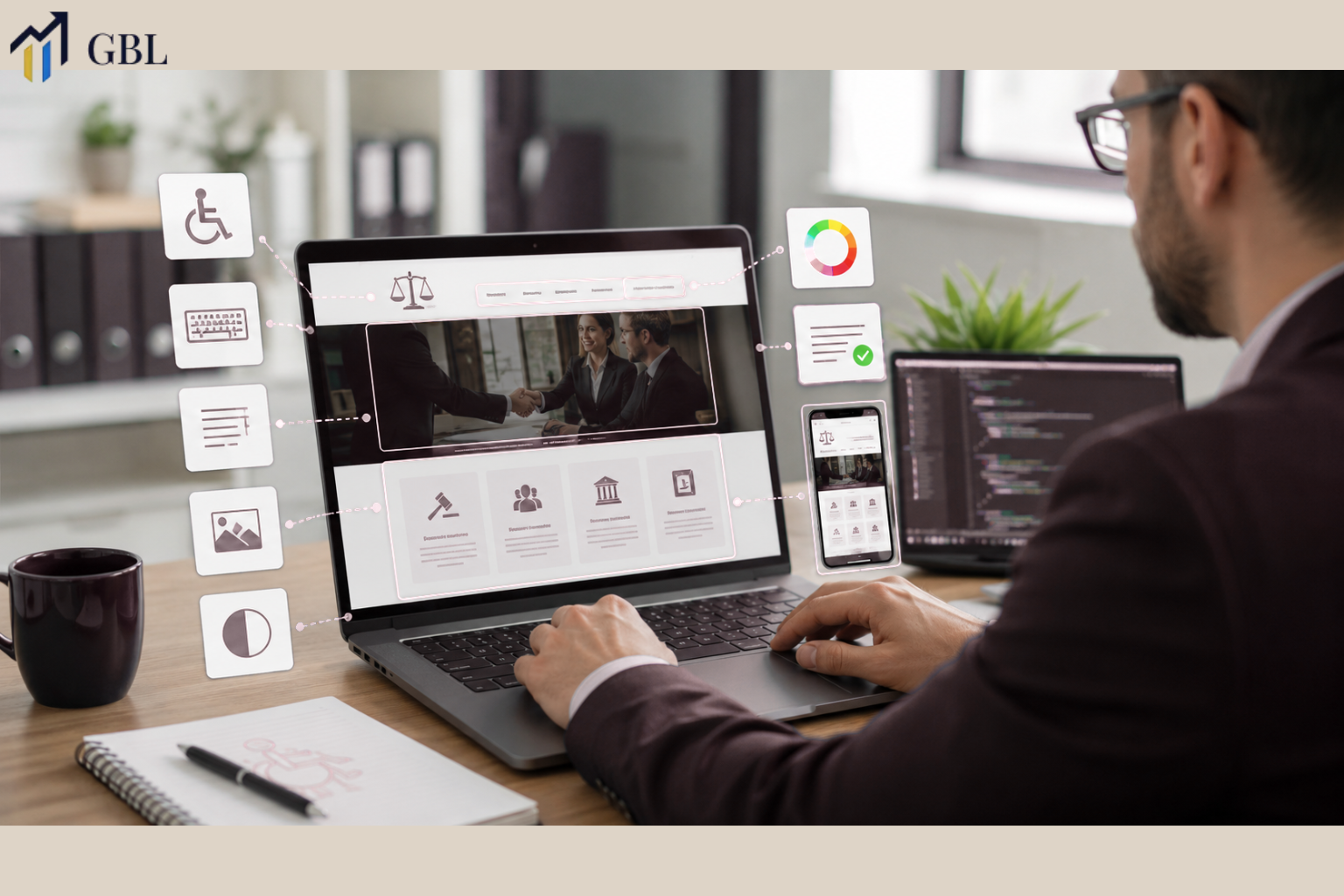
TL;DR
- Attorney website development requires more than visual design
- ADA compliance improves accessibility and usability
- SSL certificates increase trust and safeguard user data
- Website security protects rankings and reputation
- Technical structure impacts SEO performance
- Accessibility and security support conversions
- Strong infrastructure creates long-term growth
Introduction
Many law firms focus heavily on appearance.
But infrastructure determines long-term performance.
In attorney website development, ADA compliance, SSL certificates, and website security are often treated as technical details instead of core business requirements. However, these elements directly impact trust, rankings, usability, and lead generation. A website that looks professional but lacks accessibility or security creates risk for both the law firm and its users.
Strong attorney websites are built on structure, protection, and usability from the beginning.
How Attorney Website Development Depends on Strong Technical Foundations
A website for a law company is much more than a digital pamphlet. It functions as a business system that supports visibility, trust, client communication, and lead generation. In attorney website development, technical foundations influence nearly every part of website performance. Site structure, mobile usability, page speed, accessibility, internal linking, and security all work together to determine how effectively the website performs for both users and search engines.
Many law firms focus heavily on visual design while overlooking the technical structure underneath the website. A site may look modern on the surface, but still struggle with slow loading speeds, poor mobile usability, broken navigation, or weak SEO architecture. These issues reduce user engagement and make it harder for search engines to properly crawl and rank the website. Over time, weak infrastructure limits growth and creates performance problems that become more difficult to fix later.
Technical foundations also impact scalability. As law firms expand their websites with additional practice area pages, blogs, FAQs, and location content, the website structure must support that growth. Without proper organization, websites become cluttered and difficult to manage. Strong infrastructure creates stability, making it easier to scale SEO and improve rankings consistently over time.
User experience is another major factor. The technical structure directly affects how visitors interact with the website. Fast loading pages, clear navigation, and mobile-friendly layouts help users find information quickly and move naturally toward contacting the firm. When the website feels smooth and professional, users stay engaged longer and are more likely to trust the business.
Technical performance also influences conversions. Even strong marketing campaigns struggle if the website is slow, confusing, or difficult to use. A technically optimized website supports every other marketing effort more effectively.
Real Law Firm Example
One company spends a lot of money on attractive design while neglecting technological structure. The website looks attractive but loads slowly, performs poorly on mobile devices, and lacks proper SEO organization. Rankings remain inconsistent, and users leave the site quickly.
Another firm focuses on improving technical foundations before expanding content and marketing. They optimize speed, strengthen mobile usability, improve internal linking, and create a clear page structure. As a result, the website ranks more effectively, user engagement improves, and the firm generates more consultations over time.
Key Points
- Technical foundations support long-term growth
- Strong structure improves usability and engagement
- Technical SEO strengthens rankings
- Scalable infrastructure supports future expansion
- Better performance improves conversions
This is where long-term performance begins. Many law firms underestimate how much technical structure affects visibility and lead generation. However, strong attorney website development depends on building a stable foundation first. When infrastructure is optimized correctly, the website becomes easier to scale, easier to rank, and far more effective at converting visitors into real consultations.
Why ADA Compliance Matters in Attorney Website Development
Accessibility is not only about compliance. It is also about creating a better experience for every user who visits your website. In attorney website development, ADA compliance helps ensure that people with disabilities can properly navigate, understand, and interact with website content. This includes features such as readable text, keyboard-friendly navigation, proper heading structure, image alt text, color contrast, and accessible forms.
Many law firms underestimate how important accessibility is for usability and trust. A website that is difficult to navigate creates frustration for users and increases the likelihood that they will leave without contacting the firm. Accessible websites remove barriers and make information easier to understand for a wider audience. This improves overall engagement and creates a smoother user experience.
ADA compliance also reduces legal and reputational risk. Law firms are expected to maintain professional and accessible digital experiences. Ignoring accessibility standards can create complaints, damage credibility, and make the website appear outdated or difficult to use. A properly structured website demonstrates professionalism and attention to detail.
Another important factor is mobile usability. Many accessibility improvements also enhance the mobile experience. Clear layouts, readable text, organized headings, and simple navigation help all users move through the website more comfortably. This improves engagement across different devices and supports better conversion rates.
Accessibility also supports SEO performance. Search engines favor websites with clear structure, organized content, and better usability signals. Proper heading hierarchy, descriptive alt text, and structured layouts help search engines understand the website more effectively while improving accessibility at the same time.
Most importantly, accessible websites create trust. When users can easily navigate the site and access information without frustration, they feel more confident about contacting the firm.
Real Law Firm Example
One firm ignores accessibility issues and focuses only on appearance. Their website has poor color contrast, confusing navigation, and missing image descriptions. Users struggle to move through the site comfortably, and bounce rates remain high.
Another firm improves ADA structure, navigation, and readability across the website. They organize content clearly, improve accessibility features, and simplify the user experience. As a result, engagement improves, users stay on the site longer, and the firm sees more inquiries.
Key Points
- ADA compliance improves accessibility and usability
- Better structure supports stronger engagement
- Clear layouts improve navigation and readability
- Accessibility strengthens trust and professionalism
- Structured websites support better SEO performance
This is where user experience improves. Many law firms view ADA compliance as a technical requirement, but it directly affects how users experience the website. When accessibility is built into attorney website development from the beginning, the website becomes easier to use, more trustworthy, and more effective at generating consultations.
How SSL Certificates Protect Trust and Website Performance
Users expect secure websites.
Security influences trust instantly.
In attorney website development, SSL certificates encrypt data between the website and the user. This protects sensitive information submitted through forms and contact pages. Without SSL, browsers may display warning messages that reduce credibility immediately.
SSL also supports SEO performance because secure websites are favored by search engines.
Real Law Firm Example
One firm launches without SSL protection and loses user trust. Another secures the website properly and improves engagement.
Key Points
- SSL protects user data
- Secure websites improve trust
- Browser warnings reduce credibility
- Security supports SEO performance
This is where trust becomes technical.
Why Website Security Is Critical for Law Firms
Law firm websites handle sensitive information.
Weak security creates a serious risk.
In attorney website development, website security protects against hacking, malware, spam, and data breaches. Legal websites often collect contact details and confidential information, which makes them attractive targets for attacks.
Strong security systems protect both users and the business’s reputation.
Real Law Firm Example
One firm ignores updates and security monitoring. Another maintains active protection and monitoring systems. The second firm avoids downtime and security issues.
Key Points
- Security protects sensitive information
- Malware damages trust and rankings
- Monitoring reduces risk
- Protection supports business continuity
This is where reputation is protected.
How Accessibility and Security Support Attorney SEO
SEO is not only about keywords.
Technical trust signals matter.
In attorney seo, search engines evaluate usability, page experience, mobile structure, and website safety. ADA compliance and SSL protection both contribute to stronger technical performance and better user experience.
Secure and accessible websites create stronger engagement signals.
Real Law Firm Example
One firm ignores technical usability. Another improves accessibility and security structure. The second firm improves its rankings steadily.
Key Points
- Accessibility improves user signals
- Security supports SEO trust
- Technical structure impacts rankings
- Better usability improves engagement
This is where SEO becomes stronger.
Why Generic Website Templates Often Create Security Problems
Templates prioritize convenience.
Security requires customization.
Many generic templates used in attorney web development include unnecessary plugins, weak structure, or outdated systems that create vulnerabilities. These issues may not appear immediately, but over time, they increase security risks and slow performance.
Custom structure provides better long-term control.
Real Law Firm Example
One firm relies on outdated templates and experiences malware issues. Another uses structured development with active maintenance and remains secure.
Key Points
- Generic templates increase risk
- Outdated systems weaken security
- Custom structure improves control
- Maintenance supports long-term stability
This is where shortcuts become dangerous.
How Mobile Accessibility Impacts Attorney Website Development
Most legal users search on mobile devices.
Accessibility must support mobile behavior.
In web development for lawyers, mobile usability and accessibility are closely connected. Buttons must be reachable, text should remain readable, and forms should work smoothly across devices. Poor mobile structure creates frustration and increases bounce rates.
Mobile usability directly affects conversions.
Real Law Firm Example
One firm uses difficult mobile navigation. Another improves accessibility and mobile flow. The second firm increases consultations.
Key Points
- Mobile accessibility improves usability
- Better structure supports engagement
- Mobile UX impacts conversions
- Clear layouts reduce friction
This is where mobile performance matters.
How GBL Approaches Attorney Website Development Differently
Most agencies focus on appearance.
GBL focuses on performance and protection.
At GBL, attorney website development combines SEO structure, accessibility, SSL protection, and security into one connected system. Every website is designed to support rankings, trust, usability, and long-term scalability.
Strong websites should not only look professional. They should also perform securely and reliably.
Real Law Firm Example
One firm launches a visually attractive website with weak infrastructure. Another works with GBL to build a secure, optimized, and accessible system. The second firm improves both trust and performance.
Key Points
- GBL builds structured legal websites
- Security and accessibility support growth
- Technical systems improve scalability
- Strong infrastructure supports conversions
This is where sustainable performance happens.
FAQs
- Why does ADA compliance matter for law firms?
It improves accessibility, usability, and legal protection. - What does SSL do for a law firm website?
It encrypts data and improves user trust. - Can poor website security affect SEO?
Yes, malware and security issues can damage rankings. - Are templates safe for law firm websites?
Many templates create security and scalability limitations. - Why is mobile accessibility important?
Most legal users search and contact firms through mobile devices.
Conclusion
Attorney website development requires more than an attractive design. ADA compliance, SSL protection, and website security all influence trust, rankings, usability, and long-term growth. When these systems are built properly from the beginning, law firms create stronger digital foundations that support both SEO performance and client trust.
CTA
If your website focuses only on appearance while ignoring accessibility and security, your firm may already be losing trust, rankings, and potential consultations. At GBL, we build attorney websites designed for performance, protection, usability, and long-term growth. From ADA compliance to SSL setup and SEO-focused structure, every part of the system is built to support stronger visibility and better client acquisition.