
Law Firm Marketing Strategies for Social Media: Platform Selection and Content Mix by Practice Area
TL;DR
- Different legal practice areas perform better on different platforms
- Strong law firm marketing strategies focus on trust, not viral content
- Educational content builds authority and engagement
- Platform selection should match user behavior
- Content mix should balance authority, trust, and visibility
- Consistency improves long-term brand recognition
- Social media should support consultations, not just impressions
Introduction
Many law firms approach social media without a real strategy.
They post inconsistently and hope for engagement.
Strong law firm marketing strategies use social media as a long-term trust-building and visibility system rather than simply a content distribution channel. Different platforms attract different audiences, and each legal practice area requires a different communication style, content mix, and engagement strategy.
Without structure, social media becomes inconsistent and ineffective.
How Law Firm Marketing Strategies Should Match User Behavior on Social Platforms
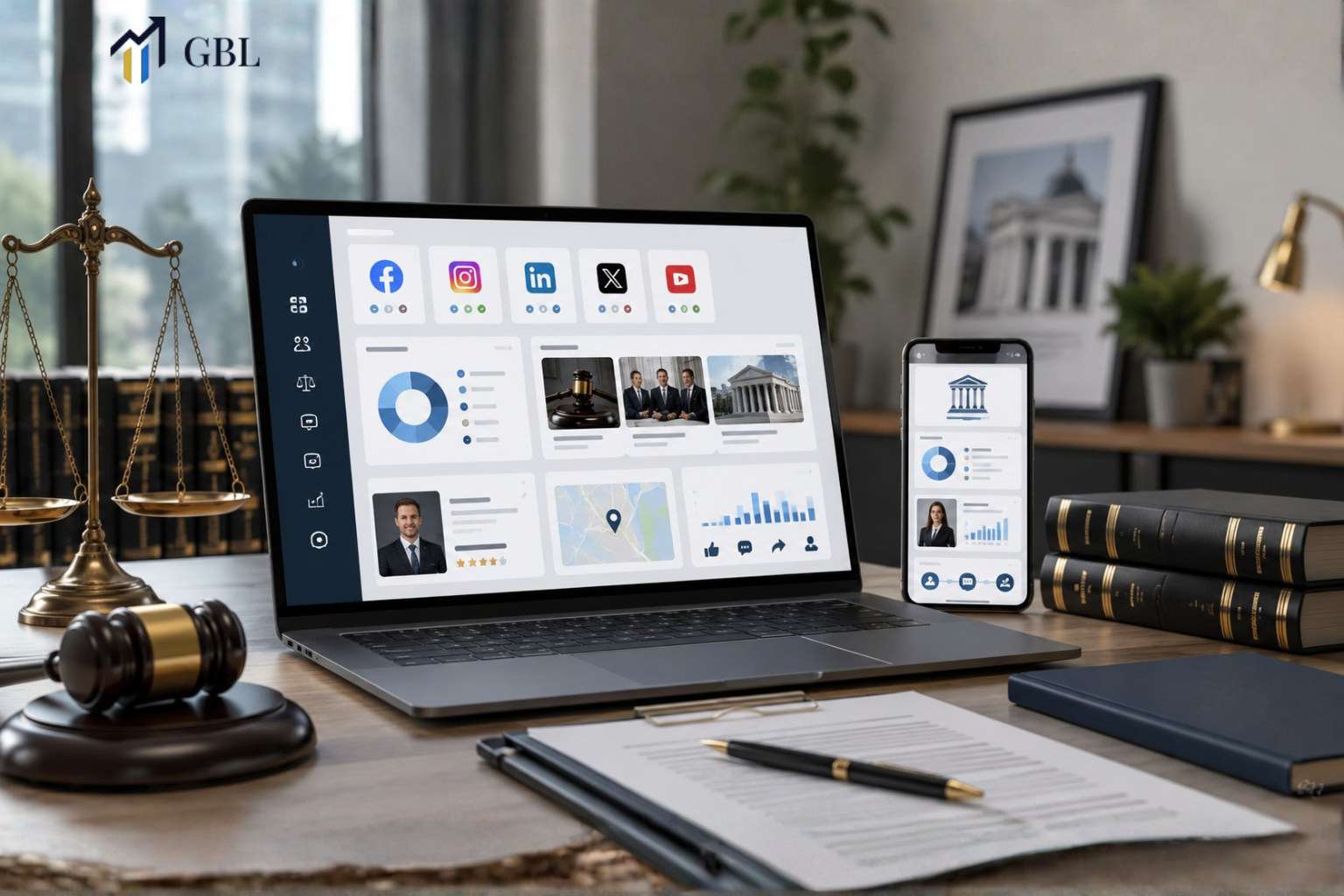
Different social media platforms attract different types of users, attention patterns, and communication styles. Strong law firm marketing strategies recognize that user behavior changes depending on the platform, which means content should be adapted instead of copied across every channel. A strategy that performs well on LinkedIn may not work the same way on Instagram, Facebook, or short-form video platforms.
LinkedIn users usually expect professional insights, legal commentary, business-focused discussions, and authority-driven content. These users often engage with educational posts, attorney perspectives, and industry expertise. Facebook users, however, tend to respond more to relatable communication, local community engagement, practical legal guidance, and conversational content styles.
Instagram and short-form video platforms reward simple explanations, visual clarity, personality, and highly digestible educational content. Users scroll quickly on these platforms, which means content must capture attention immediately while remaining easy to understand. Long and overly formal legal explanations often perform poorly in these environments.
Another important factor is audience intent. Different platforms attract users at different stages of awareness and decision-making. Some users want educational guidance, while others may already be evaluating whether to contact a lawyer. Strong strategies align content format and messaging with these behavioral differences.
Consistency in branding still matters across all channels, but content delivery should adapt naturally to how users consume information on each platform. Reposting identical content everywhere without adjustment usually weakens engagement because the messaging feels disconnected from the platform experience itself.
A strong platform strategy also improves efficiency. Instead of trying to dominate every social network equally, law firms should focus on the channels where their audience is most active and responsive. This creates more focused engagement and stronger long-term visibility.
Real Law Firm Example
One law firm reposts the same generic content across every social media platform without adjusting tone, format, or communication style. Engagement remains inconsistent because the content feels disconnected from user expectations on each channel.
Another law firm adapts messaging based on platform behavior and audience intent. LinkedIn content focuses on legal insights and authority, Facebook content emphasizes community trust and educational guidance, while Instagram uses simple visual explanations and short educational videos. The second firm improves visibility and engagement significantly.
Key Points
- Platform behavior influences engagement
- Content style should match audience intent
- Different channels serve different goals
- Educational formats improve visibility
- Strategy improves consistency and growth
This is where social media strategy begins. Many law firms treat every platform the same, but strong law firm marketing strategies adapt communication style, content structure, and messaging based on how users actually behave online. This creates stronger engagement, better visibility, and more consistent long-term brand growth.
Why Practice Area Type Should Influence Platform Selection
Different legal services attract different audiences.
Audience behavior affects platform performance.
In social media marketing for lawyers, the practice area type should influence where the law firm invests attention. Personal injury firms often perform well with educational video content and local visibility campaigns, while corporate or business law firms may perform better on LinkedIn with authority-focused insights.
Platform selection should support user intent.
Real Law Firm Example
One family law firm focuses heavily on LinkedIn despite targeting emotionally driven local users more active on Facebook and Instagram. Another aligns content platforms with user behavior and consultation intent. The second firm improves engagement and lead quality.
Key Points
- Practice area affects platform strategy
- User intent influences engagement
- Platform selection impacts visibility
- Audience alignment improves ROI
This is where targeting becomes strategic.
How Educational Content Strengthens Law Firm Social Media Marketing
Users are more likely to trust law firms that help them understand legal problems clearly, instead of only promoting services constantly. Strong law firm social media marketing focuses heavily on educational content because many legal users search for guidance before they are ready to contact a lawyer directly. When firms consistently explain legal topics in a simple and supportive way, they build authority naturally over time.
Educational content helps reduce fear, confusion, and hesitation. Short legal explanations, FAQs, process breakdowns, legal myths, practical tips, and common mistake warnings all help users feel more informed and comfortable. This type of content positions the law firm as a trusted resource instead of just another business asking for consultations.
Simple communication also improves engagement because users are more likely to interact with content they can understand quickly. Legal terminology that feels too technical or overly formal often reduces attention and sharing. Strong educational content simplifies legal concepts while maintaining professionalism and credibility.
Another important benefit is long-term brand recognition. When users repeatedly see helpful legal guidance from the same firm, they begin associating that firm with expertise and trustworthiness. Even if they are not ready to hire a lawyer immediately, the firm stays visible and memorable during future decision-making.
Educational content also supports stronger consultation quality. Users who consume informative content often arrive more informed, more confident, and more prepared to contact the firm. This creates smoother conversations and improves trust earlier in the client journey.
Real Law Firm Example
One law firm posts only promotional graphics, awards, and self-focused announcements with very little educational value. Engagement remains low because users do not gain practical insight from the content.
Another law firm regularly shares simple educational legal content answering real user concerns, explaining legal processes, and reducing confusion around common legal situations. The second firm builds much stronger audience trust, engagement, and long-term visibility.
Key Points
- Educational content builds authority
- Simple explanations improve engagement
- Helpful content strengthens trust
- Guidance supports consultations
- Clarity improves long-term visibility
This is where authority develops. Many law firms focus heavily on promotion, but users often trust firms that educate first. Strong law firm social media marketing builds visibility and credibility by consistently helping users understand legal issues clearly and confidently.
Why Emotional Tone Should Change Based on Practice Area
Different legal matters create different emotional reactions.
Tone influences user trust immediately.
In lawyers and social media, practice areas like family law, immigration, and criminal defense require calmer and more supportive messaging because users often search during stressful situations. Business law or estate planning content may require a more structured and authority-focused tone.
Wrong tone weakens trust.
Real Law Firm Example
One family law firm uses aggressive sales-focused messaging across every post. Another uses calm educational content with supportive communication and clear legal guidance. The second firm improves audience engagement significantly.
Key Points
- Tone influences emotional trust
- Messaging should match the legal context
- Calm communication improves engagement
- Emotional alignment strengthens branding
This is where communication becomes effective.
How Content Mix Impacts Visibility and Consultation Growth
Posting only one type of content limits growth.
Strong content mix improves engagement.
In effective law firm marketing ideas, social media content should balance multiple formats and goals together. Educational posts build trust, client-focused insights improve relatability, attorney branding strengthens authority, and local content improves visibility.
Variety supports long-term growth.
Real Law Firm Example
One law firm posts only promotional consultation ads repeatedly. Another mixes educational videos, FAQs, attorney insights, legal updates, testimonials, and local community content strategically. The second firm grows its audience more consistently.
Key Points
- Content variety improves engagement
- Educational posts build authority
- Branding content strengthens trust
- Local content improves visibility
This is where social media becomes scalable.
Why Consistency Matters More Than Viral Content
Social media growth requires repetition.
Consistency builds recognition over time.
Many law firms chase viral content instead of focusing on consistent visibility and trust-building. In strong law firm marketing strategies, consistent educational posting often performs better long-term than occasional high-performing posts because users repeatedly see the brand over time.
Recognition improves consultations.
Real Law Firm Example
One law firm posts heavily for short periods and disappears for weeks afterward. Another follows a structured content calendar with consistent educational posting. The second firm builds stronger brand familiarity and engagement.
Key Points
- Consistency improves visibility
- Recognition strengthens trust
- Structured posting supports growth
- Long-term presence improves engagement
This is where brand authority develops.
How Social Media Should Support the Full Client Journey
Social media should guide users forward.
Visibility alone is not enough.
Strong social media marketing for lawyers supports multiple stages of the client journey. Early-stage users consume educational content, mid-stage users evaluate trust and authority, and high-intent users eventually move toward consultations through calls to action and website engagement.
Disconnected systems weaken conversions.
Real Law Firm Example
One law firm treats social media separately from the website and consultation process. Another connects social content directly to blogs, FAQs, practice area pages, and consultation funnels. The second firm improves lead flow significantly.
Key Points
- Social media should support conversions
- Connected systems improve engagement
- Educational content guides users forward
- Website integration strengthens ROI
This is where marketing systems connect.
How GBL Builds Strategic Social Media Systems for Law Firms
Most law firms post without structure.
GBL builds strategic growth systems.
At GBL, social media strategies are built around platform behavior, practice area psychology, content structure, SEO alignment, and consultation growth. Instead of chasing random trends, GBL focuses on long-term authority, visibility, and user trust that support sustainable client acquisition.
Structured systems outperform random posting.
Real Law Firm Example
One law firm posts inconsistent promotional content with little engagement. Another works with GBL to build structured educational content systems aligned with SEO, branding, and consultation flow. The second firm improves visibility and trust significantly.
Key Points
- GBL builds structured content systems
- Platform strategy improves targeting
- Educational content strengthens authority
- Consistency improves long-term growth
This is where sustainable social growth begins.
FAQs
- Which social media platform is best for law firms?
It depends on the practice area, audience behavior, and content goals. - Why is educational content important for law firms?
It builds trust and helps users understand legal issues clearly. - Should every law firm use the same content strategy?
No. Different practice areas require different tones and platforms. - How often should law firms post on social media?
Consistency matters more than posting aggressively for short periods. - Can social media generate consultations for law firms?
Yes. Strong content systems improve visibility, trust, and user engagement over time.
Conclusion
Strong law firm marketing strategies for social media require much more than random posting or promotional graphics. Law firms should align platform selection, emotional tone, educational content, and user behavior to build authority and consultation growth consistently. Structured systems outperform inconsistent posting because they create long-term trust, visibility, and engagement that support sustainable business growth.
CTA
If your current social media strategy feels inconsistent, low-engagement, or disconnected from real consultation growth, the issue may not be the platform itself. It may be the lack of structure behind the strategy. At GBL, we build strategic social media systems for law firms designed around trust, SEO alignment, platform behavior, and long-term client acquisition so your content supports real business growth instead of just generating impressions.