
Law Firm Website Content Strategy: Mapping Each Page to a Stage in the Client Journey
TL;DR
- Strong content strategy follows the client journey
- Different pages serve different user intentions
- Practice area pages target high-intent users
- Blogs build visibility and awareness
- FAQs reduce hesitation and improve trust
- Internal linking connects the entire SEO system
- Structured content improves consultations and ROI
Introduction
Most law firms publish website content without a clear strategy.
Pages are added randomly over time.
This creates disconnected websites that struggle to rank, build trust, or generate consultations consistently. A strong Law Firm Website Content Strategy maps each page to a specific stage of the client journey. Instead of treating content as isolated pages, successful law firms build connected systems where blogs, service pages, FAQs, and local content work together to guide users toward hiring the firm.
This structure improves SEO, authority, and conversion performance at the same time.
How Law Firm Website Content Strategy Connects SEO With the Client Journey
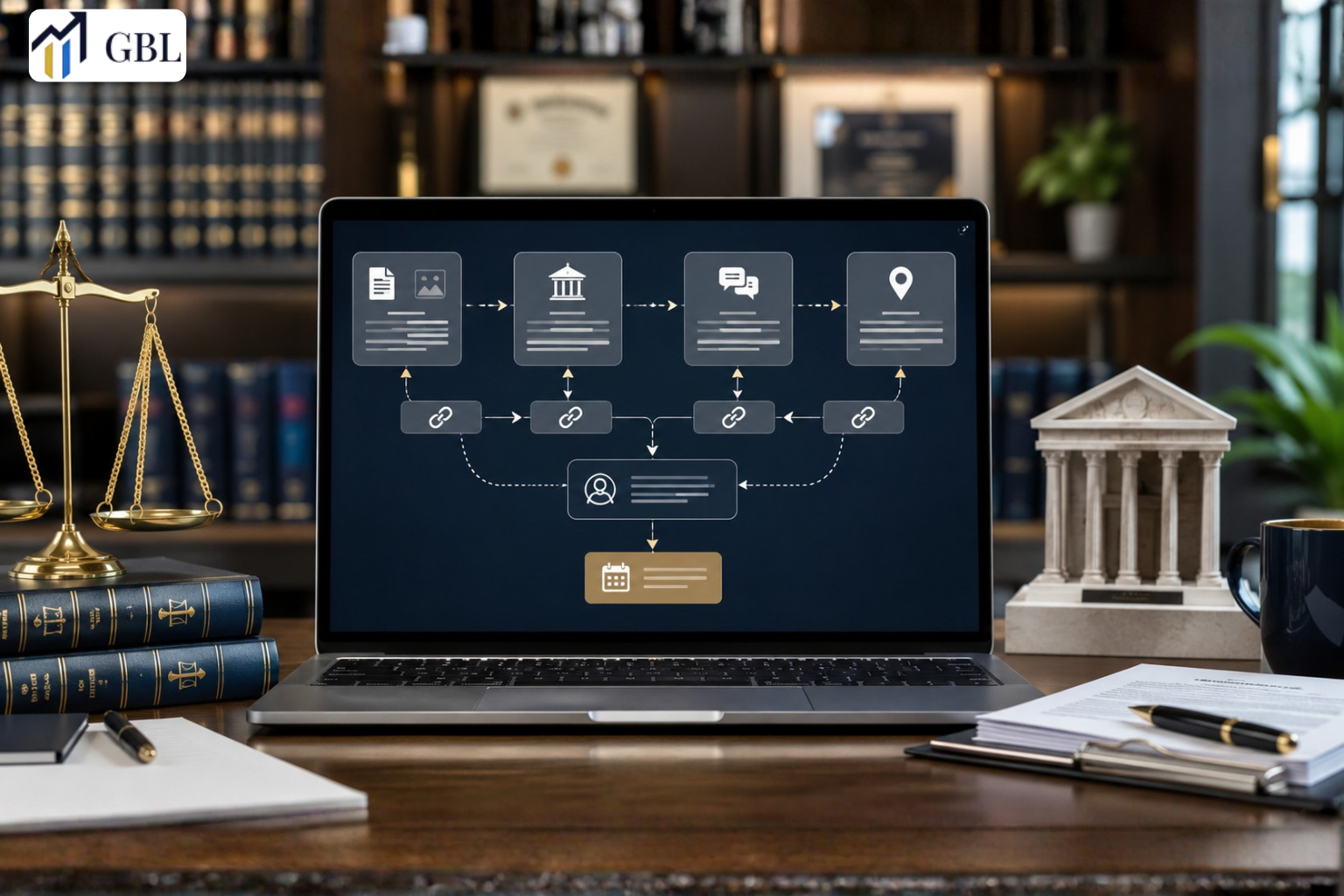
SEO works best when it follows how real users search, think, and make decisions. In a strong Law Firm Website Content Strategy, every page on the website should support a specific stage of the client journey. Instead of publishing random blogs or generic service pages, successful law firms create connected content systems designed around user intent and decision-making behavior.
Not every visitor arrives ready to contact a lawyer immediately. Some users are still researching their legal problem and trying to understand their options. Others may already know they need legal representation and are comparing firms before making a final decision. Because of this, different types of content should serve different purposes throughout the journey.
Early-stage users often search for informational questions such as legal processes, timelines, costs, or common concerns. Educational blogs and FAQs help capture these searches while building trust and visibility. Mid-stage users begin comparing lawyers, reading reviews, and evaluating experience. Practice area pages, attorney profiles, and case-related content help support this stage by improving authority and confidence.
Users closer to conversion usually want clarity, reassurance, and a simple path toward contacting the firm. Strong calls-to-action, consultation forms, testimonials, and structured service pages help reduce hesitation and improve conversion flow.
This structure also helps search engines understand the website more effectively. When practice area pages, blogs, FAQs, and local pages connect naturally through internal linking, search engines recognize stronger topical authority around legal subjects. Organized systems perform much better than isolated pages because they create clearer relevance signals.
Disconnected content creates confusion for both users and search engines. Random blogs with no strategic connection weaken authority and make the website harder to scale over time. Strong content systems create consistency, improve rankings, and guide users naturally toward consultations.
Another important benefit is usability. Users should move through the website easily without feeling lost or overwhelmed. A clear journey improves engagement, increases time on site, and strengthens trust throughout the decision-making process.
The most effective law firm websites are built like structured journeys instead of collections of unrelated pages.
Real Law Firm Example
One law firm publishes blogs and service pages without any clear organization or internal structure. The content topics feel disconnected, users struggle to navigate the website naturally, and search rankings remain inconsistent.
Another law firm builds its website around awareness, consideration, and conversion stages. Educational blogs answer early legal questions, FAQs reduce hesitation, and practice area pages guide users toward consultations clearly. Internal linking connects the entire structure together strategically. As a result, the second firm improves rankings, engagement, and consultation flow significantly.
Key Points
- Content should follow user intent
- Different pages support different goals
- Structured journeys improve usability
- Internal linking strengthens authority
- Client-focused systems improve conversions
This is where content strategy becomes scalable. Many law firms create content without considering how users actually move through the decision-making process. However, a strong Law Firm Website Content Strategy connects SEO, usability, trust, and conversion flow together so every page contributes to rankings and consultation growth more effectively over time.
Why Practice Area Pages Are the Core of Law Firm Website Content Strategy
Practice area pages are some of the most important pages on a law firm website because they directly target users searching for legal help. In most cases, these users are already aware of their legal problem and are actively looking for a lawyer they can trust. This is why practice area pages often become the highest-converting part of a strong Law Firm Website Content Strategy.
Unlike informational blog readers, users visiting practice area pages usually have a stronger intent. Someone searching for “divorce lawyer,” “personal injury attorney,” or “criminal defense lawyer” is often much closer to contacting a law firm. Because of this, these pages must do more than simply explain services. They need to build trust, answer concerns, demonstrate authority, and guide users naturally toward consultations.
Strong practice area pages combine SEO structure with conversion-focused messaging. Search engines need detailed and organized content to understand what the page is about and when it should appear in rankings. Clear headings, service explanations, internal linking, FAQs, local relevance, and supporting content all strengthen visibility. Weak pages with very little detail struggle to rank because they fail to demonstrate depth and relevance.
User experience also plays a major role. Legal users are often stressed, uncertain, or emotionally overwhelmed when searching for representation. Strong service pages explain legal processes clearly while reducing confusion and hesitation. Simple language, organized layouts, and supportive guidance improve engagement significantly.
Practice area pages should also reinforce credibility. Attorney experience, trust signals, consultation flow, testimonials, and clear calls-to-action help users feel more confident in the firm. When these elements are missing, users are more likely to leave the website and continue searching elsewhere.
Internal linking strengthens these pages even further. Supporting blogs, FAQs, and local landing pages should connect naturally back to the main practice area pages. This creates stronger topical authority while helping users move through the website more effectively.
Another major advantage is scalability. As the website grows, practice area pages become the foundation supporting larger SEO systems. Blogs, educational content, and local SEO pages all strengthen the authority of these core service pages over time.
Strong practice area pages are not just informational pages. They are strategic conversion assets designed to improve rankings, trust, and conversions together.
Real Law Firm Example
One law firm uses short, generic practice area pages with minimal detail and little strategic structure. The pages briefly mention services but fail to explain the legal process clearly or guide users toward contacting the firm. Rankings remain weak, and consultation rates stay inconsistent.
Another law firm builds detailed service pages explaining legal issues, attorney experience, legal timelines, FAQs, consultation flow, and related resources clearly. Internal links connect the pages to supporting blogs and local content naturally. The second firm improves rankings, authority, and consultation conversions significantly.
Key Points
- Practice area pages target high-intent users
- Detailed pages improve authority and trust
- Clear messaging strengthens conversions
- Structured layouts support SEO performance
- Internal linking improves topical relevance
This is where consultations begin. Many law firms underestimate how much long-term SEO and conversion performance depend on the quality of their practice area pages. However, in a strong Law Firm Website Content Strategy, these pages become the core foundation connecting rankings, trust, authority, and consultation growth together.
How Educational Blogs Expand Visibility Earlier in the Client Journey
Many legal users begin with questions.
Blogs capture early-stage searches.
In content marketing for law firms, blogs help firms appear in informational searches before users are ready to hire immediately. Educational content answers common legal concerns, builds topical authority, and introduces users to the law firm earlier in the decision-making process.
Awareness content supports long-term visibility.
Real Law Firm Example
One law firm focuses only on service pages and misses informational traffic opportunities. Another creates educational blog clusters answering common legal questions related to practice areas. The second firm expands visibility and builds stronger authority.
Key Points
- Blogs expand search visibility
- Informational content builds authority
- Educational pages improve trust
- Topic clusters strengthen SEO
This is where awareness begins.
Why FAQs Reduce Hesitation and Improve Conversion Flow
Users hesitate before contacting lawyers.
FAQs reduce uncertainty.
In Law Firm Website Content Strategy, FAQ sections help users feel more confident before scheduling consultations. Many users worry about costs, timelines, legal processes, or whether their issue qualifies for representation. FAQ content answers these concerns quickly while improving SEO relevance.
Clarity improves trust significantly.
Real Law Firm Example
One law firm provides little guidance beyond service descriptions. Another includes structured FAQs across practice area pages explaining common concerns clearly. The second firm keeps users engaged longer and improves consultation rates.
Key Points
- FAQs reduce hesitation
- Clear answers improve trust
- FAQ content strengthens SEO relevance
- Structured guidance improves UX
This is where trust grows.
How Internal Linking Connects the Entire Website Content Strategy
Pages should support each other.
Internal links create authority flow.
In law firm content marketing, internal linking helps search engines understand relationships between pages while guiding users naturally through the website. Practice area pages, blogs, local pages, and FAQs should reinforce each other strategically through contextual links.
Disconnected pages weaken SEO performance.
Real Law Firm Example
One law firm publishes pages with almost no internal links. Another builds structured topic clusters connecting practice areas, blogs, and FAQs together. The second firm improves rankings across multiple legal keywords.
Key Points
- Internal linking strengthens authority
- Connected pages improve rankings
- Topic clusters improve relevance
- Structure improves scalability
This is where SEO systems become stronger.
Why Local Content Improves Visibility for High-Intent Searches
Most legal searches are local.
Location relevance influences rankings.
In content marketing for lawyers, local landing pages help law firms rank for geographically targeted searches tied to specific legal services. These pages reinforce local relevance while improving visibility in Maps and organic results.
Local SEO strengthens consultation quality.
Real Law Firm Example
One law firm targets only broad legal terms. Another builds city-specific service pages connected to practice area content. The second firm generates more local consultations and improves Maps visibility.
Key Points
- Local pages improve geographic relevance
- Maps’ visibility supports lead generation
- Location targeting improves conversions
- Local SEO strengthens authority
This is where local visibility expands.
How Conversion-Focused Content Improves Consultation Rates
Traffic alone does not create growth.
Conversions determine ROI.
Strong Law Firm Website Content Strategy includes a conversion-focused structure across every important page. Clear calls-to-action, trust signals, attorney profiles, testimonials, consultation forms, and supportive messaging all influence whether users contact the firm.
Strong UX supports business growth.
Real Law Firm Example
One law firm generates traffic but struggles with conversions because pages lack structure and trust-building elements. Another improves consultation flow and user clarity throughout the website. The second firm improves lead quality and consultation volume.
Key Points
- Conversion structure improves ROI
- Trust signals strengthen engagement
- Clear CTAs improve consultations
- UX directly impacts lead generation
This is where content becomes profitable.
How GBL Builds Strategic Content Systems for Law Firms
Most law firm websites grow randomly.
GBL builds structured systems.
At GBL, every Law Firm Website Content Strategy is built around the client journey, search intent, topical authority, and conversion optimization, working together. Instead of publishing disconnected content, GBL creates scalable systems where every page supports rankings, trust, and consultation growth.
Connected strategy improves long-term performance.
Real Law Firm Example
One law firm publishes random blogs and generic service pages with little coordination. Another works with GBL to build structured content clusters mapped to awareness, consideration, and conversion stages. The second firm improves visibility, authority, and consultation growth significantly.
Key Points
- GBL builds connected SEO systems
- Structured content improves scalability
- User journeys improve conversions
- Strategic planning strengthens authority
This is where sustainable growth begins.
FAQs
- What is a law firm website content strategy?
It is a structured system where each page supports SEO, trust, and conversions. - Why are practice area pages important?
They target high-intent users searching for legal services directly. - How do blogs help law firms?
Blogs improve visibility and build authority around legal topics. - Why are FAQs important for law firm websites?
They reduce hesitation and answer common legal concerns. - How does internal linking improve legal SEO?
It strengthens topical authority and helps search engines understand page relationships.
Conclusion
Strong law firm websites are not built from random pages added over time. Successful firms create structured content systems where practice area pages, blogs, FAQs, local pages, and conversion-focused content all support the client journey together. This approach improves rankings, strengthens authority, and generates more consultations consistently over the long term.
CTA
If your current website content feels disconnected, inconsistent, or unable to generate predictable consultations, the issue may not be the amount of content. It may be the lack of structure behind it. At GBL, we build strategic law firm content systems designed around SEO, user intent, and conversion optimization so every page works together to support long-term growth and better ROI.