
Web Designer in Fort Lauderdale: Freelancer vs Agency for a Law Firm Project
TL;DR
- Choosing the right web designer in Fort Lauderdale impacts SEO, trust, and consultations
- Freelancers may work on smaller projects with a limited scope
- Agencies usually provide stronger systems and scalability
- Legal websites require SEO, UX, and a conversion strategy together
- Project management affects timelines and quality
- Long-term support matters for law firm growth
- The right choice depends on goals, complexity, and growth plans
Introduction
Many law firms struggle to decide whether they should hire a freelancer or an agency for their website project.
At first, both options may appear similar.
However, legal websites require more than visual design. A successful law firm website must support SEO, trust-building, mobile usability, conversion optimization, and long-term scalability. When hiring a web designer in Fort Lauderdale, law firms should evaluate not only cost, but also strategy, structure, and the ability to support future growth.
The wrong decision can create delays, weak SEO performance, and low consultation rates.
How a Web Designer in Fort Lauderdale Influences Long-Term Website Performance
A law firm website is not just a digital brochure. It becomes one of the most important parts of the firm’s long-term marketing system. In competitive legal markets, the quality of the website directly affects search rankings, user trust, consultation rates, and overall business growth. This is why choosing the right web designer in Fort Lauderdale is a much bigger decision than many firms initially realize.
Many law firms focus mainly on visual appearance during the hiring process. While professional design is important, appearance alone does not determine website performance. A visually attractive website can still struggle to rank on Google, create a poor user experience, or fail to generate consultations if the structure behind it is weak. Strong websites combine design, SEO, usability, and conversion strategy.
Site structure is one of the most important long-term factors. Search engines rely on organized page hierarchy, internal linking, mobile usability, URL structure, and technical SEO signals to understand the website properly. If these systems are poorly built from the beginning, future SEO growth becomes much harder and more expensive to improve later.
User experience also has a major impact on performance. Legal users often search during stressful situations and want information quickly. Slow pages, confusing layouts, cluttered navigation, or weak mobile usability create frustration that reduces trust immediately. Strong website structure helps users move naturally through the website while guiding them toward consultations.
Conversion flow is another critical area that many designers overlook. A website should not simply provide information. It should guide users toward action through clear calls to action, trust signals, consultation forms, attorney profiles, and organized service pages. When these systems work together, the website becomes a stronger lead-generation asset.
Scalability matters as well. Law firms often expand their marketing over time through SEO campaigns, local landing pages, blogs, FAQs, and practice area content. A poorly structured website becomes difficult to scale because the technical foundation cannot support long-term growth efficiently.
The right designer understands that a law firm website must support rankings, authority, usability, and conversions simultaneously instead of focusing only on appearance.
Real Law Firm Example
One law firm hires a low-cost designer focused mainly on visuals. The website launches with modern graphics and animations, but the structure is weak, mobile usability is inconsistent, and SEO foundations are poorly organized. Over time, rankings remain limited and consultation growth stays inconsistent.
Another law firm hires a strategic team that builds SEO hierarchy, mobile optimization, internal linking, and conversion systems directly into the website from the beginning. Practice area pages are organized properly, navigation is clear, and calls-to-action guide users naturally. As a result, the second firm generates stronger rankings, better engagement, and more consistent long-term growth.
Key Points
- Website structure directly impacts rankings
- UX influences consultations and trust
- SEO foundations support scalability
- Conversion flow improves lead generation
- Strategy matters more than visuals alone
This is where website performance begins. Many law firms underestimate how much long-term growth depends on the quality of the website foundation itself. However, choosing the right web designer in Fort Lauderdale can influence visibility, trust, consultations, and scalability for years. Strong structure and strategic planning create websites that continue supporting growth long after launch instead of becoming expensive limitations later.
Why Freelancers Work Better for Smaller and Simpler Projects
Freelancers can offer flexibility.
Smaller projects may not require large teams.
In Fort Lauderdale web design, freelancers are often a good fit for smaller law firms that need a simple website with limited functionality. Solo practitioners or newer firms may choose freelancers for affordability and faster communication.
However, simpler projects usually involve lower complexity.
Real Law Firm Example
One solo attorney hires a freelancer for a basic informational website and launches successfully within budget. Another growing law firm attempts to scale using the same setup and struggles with SEO limitations later.
Key Points
- Freelancers may reduce upfront costs
- Small projects require less infrastructure
- Simpler websites may launch faster
- Limited scalability can create future issues
This is where freelancers can make sense.
How Agencies Provide Stronger Systems for Legal Website Growth
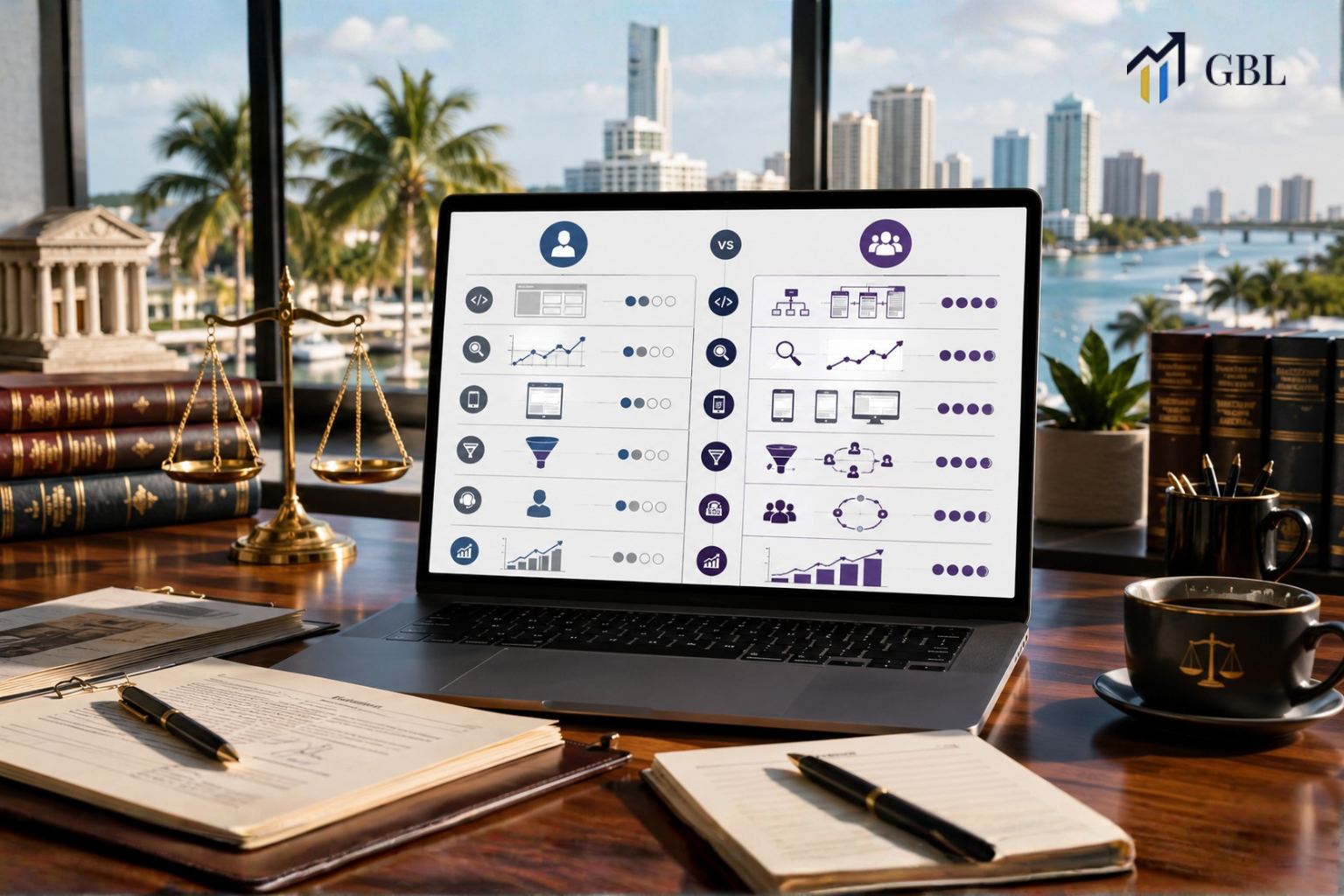
Law firm websites require much more than an attractive visual design. In competitive legal markets, websites must support SEO rankings, user trust, mobile usability, lead generation, content structure, and long-term scalability at the same time. This is why agencies often provide stronger long-term value for legal projects. In website design Fort Lauderdale, agencies usually combine multiple specialized skill sets to create a more complete growth system.
A professional agency brings designers, developers, SEO strategists, content planners, UX specialists, and conversion experts into one connected workflow. Instead of treating the website as a simple design project, agencies approach it as a long-term business asset designed to support rankings and consultations over time. This creates stronger consistency across every part of the website.
Legal websites are especially demanding because law firms compete aggressively for visibility and trust. Search engines evaluate technical structure, mobile performance, content organization, and user engagement very closely in legal markets. At the same time, users often arrive under stress and expect immediate clarity and professionalism. Agencies are usually better equipped to balance all of these requirements together.
SEO and user experience must work as one system. Strong agencies build practice area structures, internal linking systems, optimized navigation, mobile responsiveness, and conversion-focused layouts directly into the website from the beginning. This creates a stronger technical foundation that supports long-term growth and future SEO expansion.
Another advantage is scalability. Law firms often expand their websites over time with blogs, FAQs, local landing pages, and additional practice area content. Agencies typically build websites with this future growth in mind, which prevents structural problems later. A weak foundation can make expansion difficult and expensive.
Project management also improves with agencies. Structured workflows, organized communication, milestone planning, and quality control systems help reduce delays and improve consistency during development. This becomes especially valuable for larger law firm projects where multiple components must work together smoothly.
Agencies also provide ongoing support after launch. SEO improvements, content updates, technical maintenance, and conversion optimization usually continue long after the website goes live. Strong agencies help firms maintain performance instead of treating the launch as the final step.
Real Law Firm Example
One firm hires a freelancer skilled in visual design but with limited SEO and conversion experience. The website looks modern, but practice area pages lack structure, internal linking is weak, and mobile usability issues reduce engagement. Rankings remain inconsistent, and long-term growth slows down.
Another firm works with an agency that combines SEO architecture, UX strategy, internal linking, content structure, mobile optimization, and conversion systems from the beginning. The website launches with stronger foundations and continues scaling effectively through SEO and content expansion. As a result, the second firm improves visibility, engagement, and consultation growth much faster.
Key Points
- Agencies provide broader expertise
- SEO and UX work together strategically
- Structured systems improve scalability
- Multi-disciplinary teams improve execution
- Long-term support strengthens growth
This is where agencies create long-term value. Many law firms focus only on the upfront website build without considering how the site will perform over time. However, in website design Fort Lauderdale, long-term growth depends on connected systems working together properly. Agencies are often better equipped to build scalable legal websites that support rankings, trust, usability, and consultation growth consistently over the long term.
Why Legal Industry Experience Matters More Than General Web Design Skills
Legal websites require specialized thinking.
Generic design experience is not enough.
In Fort Lauderdale website design, agencies or freelancers with legal industry experience understand how emotional trust, local SEO, practice area pages, and consultation-focused UX influence performance. Law firm users behave differently from users in most other industries.
Specialization improves strategy quality.
Real Law Firm Example
One designer creates attractive websites but lacks an understanding of legal SEO and practice area structure. Another specializes in law firm websites and builds pages around search intent and conversions. The second firm performs better.
Key Points
- Legal SEO requires specialization
- Emotional trust impacts conversions
- Practice area structure matters
- Industry knowledge improves performance
This is where expertise becomes important.
How Project Management Affects Timelines and Website Quality
Strong communication keeps projects moving.
Poor management creates delays.
Many law firms underestimate how much project management influences website success. Agencies often provide structured workflows, timelines, review systems, and organized communication. Freelancers may offer faster communication, but can struggle when the project scope expands.
Structure improves execution.
Real Law Firm Example
One firm experiences repeated delays because requirements are unclear and revisions are unmanaged. Another follows a structured development process with organized milestones and launches successfully on schedule.
Key Points
- Clear processes improve efficiency
- Timelines depend on structure
- Communication affects execution
- Project management reduces delays
This is where projects stay organized.
Why SEO and Conversion Strategy Should Influence Hiring Decisions
A website should generate consultations.
Design alone is not enough.
Many law firms evaluate portfolios only by appearance without reviewing SEO structure or conversion systems. Strong Fort Lauderdale Web Design Companies understand how rankings, trust signals, mobile UX, and calls-to-action work together to improve conversion rates.
SEO and conversions determine ROI.
Real Law Firm Example
One firm launches a visually modern site with weak rankings and low lead volume. Another launches a strategically optimized website focused on legal SEO and conversions. The second firm improves consultation growth consistently.
Key Points
- SEO impacts visibility
- Conversion systems improve ROI
- Trust signals strengthen engagement
- Strategic UX supports growth
This is where websites become profitable.
How Long-Term Support Impacts Law Firm Website Success
Websites continue evolving after launch.
Support influences long-term performance.
Law firms often need ongoing SEO updates, technical maintenance, content additions, and conversion improvements after the website goes live. Agencies usually provide structured support systems, while freelancers may have limited availability depending on workload.
Long-term growth requires ongoing optimization.
Real Law Firm Example
One firm launches a website but struggles to get updates completed consistently afterward. Another works with a partner providing continuous SEO and technical support. The second firm improves visibility over time.
Key Points
- Ongoing support improves scalability
- SEO requires continuous optimization
- Maintenance affects performance
- Long-term partnerships improve stability
This is where sustainable growth develops.
How GBL Builds Strategic Law Firm Websites for Long-Term Growth
Most websites focus only on appearance.
GBL focuses on business performance.
At GBL, every law firm website is built around SEO structure, conversion optimization, mobile usability, trust-building, and scalability, working together. Instead of creating websites that simply look professional, GBL creates strategic systems designed to improve rankings and consultations consistently.
Strong legal websites should generate measurable growth.
Real Law Firm Example
One law firm hires a general designer and launches a visually appealing website that struggles to rank and convert. Another works with GBL to build a structured legal marketing system focused on SEO and consultation growth. The second firm improves visibility and ROI significantly.
Key Points
- GBL builds SEO-focused legal websites
- Conversion systems improve consultations
- Structured UX supports engagement
- Long-term strategy improves scalability
This is where sustainable website performance begins.
FAQs
- Should a law firm hire a freelancer or an agency?
It depends on project complexity, growth goals, and SEO requirements. - Are freelancers cheaper than agencies?
Usually, yes, but they may provide fewer long-term systems and support. - Why does legal industry experience matter?
Legal websites require specialized SEO and trust-building strategies. - Do agencies provide better SEO support?
Most agencies offer broader expertise in SEO and conversion. - Why is long-term support important?
Law firm websites require continuous updates and optimization.
Conclusion
Choosing between a freelancer and an agency is not only about cost. It is about scalability, SEO performance, conversion systems, and long-term support. Law firms that carefully evaluate structure, legal expertise, and strategic thinking are more likely to build websites that consistently generate rankings, trust, and consultations over time.
CTA
If your current website looks professional but still fails to generate consistent consultations, the problem may not be the design itself. It may be the lack of strategy behind it. At GBL, we build structured law firm website systems designed around SEO, user trust, and conversion optimization so your website becomes a scalable client-generation asset instead of just another online brochure.