
Web Development for Lawyers: How to Set Specifications That Protect You When Results Disappoint
TL;DR
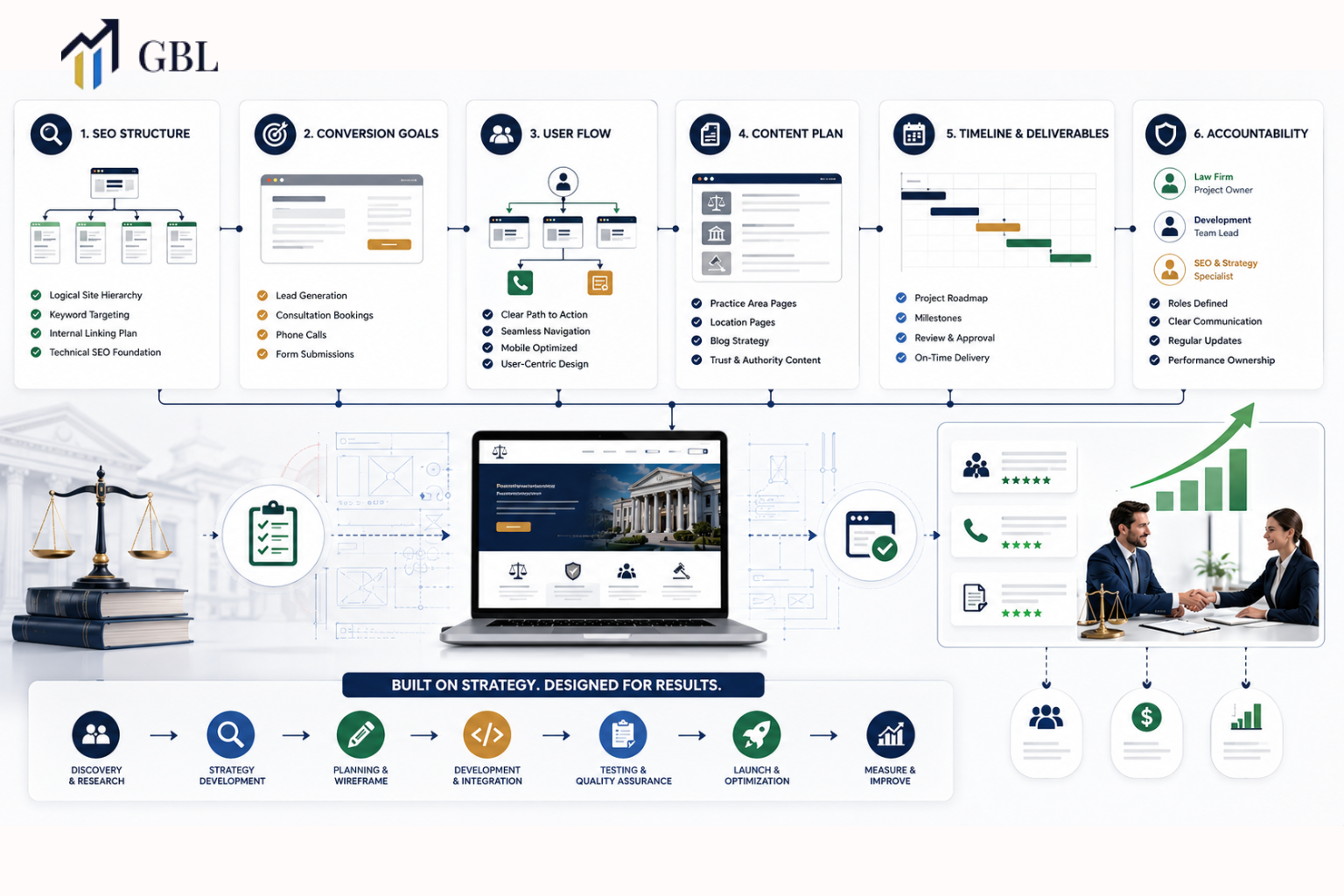
- Most web development for lawyers projects fail because expectations are unclear
- Specifications protect budget, timelines, and results
- Scope changes create delays and weak performance
- SEO and conversion goals must be defined early
- Structure matters more than appearance
- Accountability improves project outcomes
- Clear systems reduce risk and increase ROI
Introduction
Many law firms invest in website development expecting growth.
But the results often disappoint.
The website launches, but rankings stay weak, leads remain inconsistent, and performance never matches expectations. In most cases, the problem is not the developer alone. It is the lack of clear specifications from the beginning. In web development for lawyers, unclear expectations create confusion, delays, and weak outcomes.
At GBL, we see this happen repeatedly. Law firms focus on visual design and launch timelines without defining the structure, goals, and performance requirements the website actually needs to succeed. As a result, projects move forward without clear direction, leading to websites that look professional but fail to generate real business results.
A website project should not start with design. It should start with structure, goals, and accountability.
Why Most Website Development Projects Fail Before Design Begins
Most website development projects fail early, long before design work even starts. The problem is usually not the developer, the platform, or the technology. In most cases, the issue begins with weak planning and unclear expectations. In web development for lawyers, many firms focus heavily on visual ideas and inspiration but ignore the deeper structure that determines whether the website will actually perform.
Law firms often start projects by discussing colors, layouts, and design preferences without clearly defining goals. They do not document what the website should achieve, how users should move through it, or how it will support SEO and lead generation. This creates confusion because developers and law firms are not aligned on what success actually means. One side may focus on appearance while the other expects business growth. Without clarity, the project quickly loses direction.
Another major issue is the lack of specifications. When there are no detailed requirements, every decision becomes subjective. Feedback changes constantly, revisions increase, and timelines become unpredictable. Over time, frustration grows because expectations were never clearly defined from the beginning.
Strong planning creates alignment. It defines structure, goals, responsibilities, and performance expectations before development begins. This allows the project to move more efficiently and reduces unnecessary delays.
Real Law Firm Example
One firm begins development with vague ideas and no documented goals. As the project progresses, they continue changing layouts, content, and features. The timeline extends, costs increase, and the final website still does not perform as expected.
Another firm creates detailed specifications before the project starts. They define SEO goals, service structure, user flow, and conversion expectations early. Because everyone understands the direction from the beginning, the project launches faster and delivers stronger results.
Key Points
- Weak planning creates confusion and delays
- Unclear goals reduce website performance
- Structure must be defined before design begins
- Specifications align expectations and workflow
- Clear direction improves efficiency and outcomes
This is where projects begin to fail. Most law firms underestimate how much planning impacts performance. When development starts without structure, problems continue throughout the project. A clear strategy and detailed specifications create a stronger foundation, helping the website launch smoothly and perform effectively long after it goes live.
How Clear Specifications Protect Your Budget and Timeline
Specifications create boundaries, and boundaries are what keep website projects under control. In web development for lawyers, one of the biggest reasons projects become delayed and expensive is the lack of a clearly defined scope. When expectations are not documented from the beginning, firms often continue adding new ideas, changing layouts, or requesting additional features during development. Each adjustment may seem small, but together they create major delays and increased costs.
Without clear specifications, projects lose focus quickly. Developers spend more time revising previous work instead of moving forward. Communication becomes less efficient because everyone has a different understanding of what the final website should include. Over time, timelines become unpredictable, budgets increase, and frustration grows on both sides.
A detailed specification document helps prevent these issues. It clearly outlines what will be delivered, how the website will function, what features are included, and what the goals of the project are. This creates alignment between the law firm and the development team. Everyone understands the expectations before work begins, which reduces confusion and keeps the project moving in the right direction.
Specifications also improve decision-making. Instead of reacting emotionally during development, firms can refer back to the agreed plan. This creates consistency and helps avoid unnecessary changes that slow progress.
Real Law Firm Example
One firm starts development without detailed specifications. As the project moves forward, they repeatedly request new features and design changes. The timeline extends by several weeks, costs increase significantly, and the launch becomes stressful.
Another firm creates a detailed specification document before development begins. Their goals, features, SEO structure, and conversion requirements are clearly defined from the start. Because expectations remain aligned throughout the process, the project launches on time and stays within budget.
Key Points
- Specifications reduce delays and revisions
- Clear scope helps control project costs
- Documentation improves communication and workflow
- Defined expectations reduce confusion
- Structure keeps timelines predictable
This is where timelines stay predictable. Most law firms underestimate how quickly small changes can affect an entire project. When specifications are clear from the beginning, website development becomes more organized, efficient, and far easier to manage.
Why SEO Requirements Must Be Defined Before Development Starts
SEO is not an add-on.
It is part of the foundation.
Many law firms treat SEO as something added after launch. However, in web development for lawyers, SEO should influence the structure from the beginning. URL hierarchy, internal linking, service pages, and mobile usability must all be planned early.
Without this, websites require expensive rebuilds later.
Real Law Firm Example
One firm launches first and adds SEO later. Another builds SEO into the structure from day one. The second firm ranks faster.
Key Points
- SEO must guide structure
- Internal linking supports rankings
- Planning reduces future issues
- Foundation impacts visibility
This is where rankings begin.
How Conversion Goals Should Shape Website Development
A website should generate cases.
Not just look professional.
In web development for lawyers, every page should guide users toward action. This includes clear calls-to-action, trust signals, and strong page flow. Without conversion planning, traffic does not turn into consultations.
Design without conversion strategy limits ROI.
Real Law Firm Example
One firm builds around visuals. Another builds around user flow and conversions. The second firm generates more inquiries.
Key Points
- Conversion strategy drives ROI
- UX impacts lead generation
- Trust signals improve engagement
- Structure guides action
This is where websites generate results.
Why Scope Creep Destroys Website Performance and Timelines
More changes create more problems.
Projects lose direction quickly.
In web development for lawyers, scope creep happens when firms continuously request changes outside the original plan. This creates delays, increases costs, and weakens focus. Over time, the project becomes inconsistent.
Strong specifications reduce unnecessary changes.
Real Law Firm Example
One firm constantly changes layouts and features. Another sticks to the approved scope. The second firm launches smoothly.
Key Points
- Scope creep delays launches
- Constant revisions reduce efficiency
- Clear plans improve execution
- Focus supports performance
This is where projects lose momentum.
How Accountability Improves Website Development Outcomes
Accountability creates clarity.
Clarity improves execution.
In lawyer website development, responsibilities must be defined clearly. Firms need to know who approves content, who reviews design, and who manages deadlines. Without accountability, projects stall and communication breaks down.
Clear ownership keeps development moving forward.
Real Law Firm Example
One firm has no decision-maker and delays every phase. Another assigns clear responsibilities and launches efficiently.
Key Points
- Accountability improves workflow
- Defined roles reduce delays
- Clear communication supports progress
- Ownership improves execution
This is where efficiency improves.
Why Generic Templates Often Create Long-Term Problems
Templates feel easy.
But limitations appear later.
A law firm website template may help a firm launch quickly, but it often lacks flexibility and strategic structure. Generic templates are not designed around your services, competition, or SEO goals.
As firms grow, these limitations become more expensive.
Real Law Firm Example
One firm stays on a template and struggles to grow. Another invests in structure early and scales faster.
Key Points
- Templates limit flexibility
- Generic structure weakens SEO
- Growth requires customization
- Long-term ROI matters more
This is where firms outgrow templates.
How to Evaluate a Development Partner Before Signing a Contract
The right partner defines expectations clearly.
Weak partners avoid detail.
In web development for lawyers, a strong development partner explains deliverables, timelines, SEO considerations, and conversion strategy before the project begins. They focus on outcomes, not just design.
The best partners reduce uncertainty.
Real Law Firm Example
One firm chooses based on price and struggles. Another chooses a structured partner and sees stronger performance.
Key Points
- Clarity matters before launch
- Strong partners define scope
- Strategy improves outcomes
- Planning reduces risk
This is where better decisions happen.
FAQs
- Why do website projects fail?
Because expectations and scope are unclear. - Should SEO be included before development?
Yes, structure should support SEO from the start. - What is scope creep?
Continuous project changes that increase cost and delays. - Why are specifications important?
They protect budget, timelines, and outcomes. - Are templates good for law firms?
Only for basic short-term needs.
Conclusion
Web development for lawyers is not just about building a website. It is about creating a structured system designed to support rankings, conversions, and long-term growth. When specifications are clear from the beginning, projects become more predictable, efficient, and effective.
CTA
If your website project feels unclear or underperforming, the issue is usually not design alone. It is the lack of structure behind the process. Most law firms start development without defining the specifications that actually protect performance and ROI. At GBL, we build structured websites designed to rank, convert, and generate real case inquiries. Instead of guessing through development, you get a clear system built for growth. If you want a website strategy that delivers measurable results, this is where it starts.