
Website Design for Family Lawyers: Practice Area Pages That Rank and Convert
TL;DR
- Website design for family lawyer websites should focus on both SEO and emotional trust
- Practice area pages target high-intent users ready to hire
- Clear structure improves rankings and usability
- Emotional messaging strengthens engagement
- Internal linking supports topical authority
- Mobile-friendly layouts improve conversions
- Strong practice area pages guide users toward consultations
Introduction
Many family law firms struggle to turn website traffic into consultations.
The issue is often not the traffic itself.
It is the structure and quality of the practice area pages. In website design for family lawyer websites, practice area pages are some of the most important parts of the entire SEO and conversion system. These pages help search engines understand your services while helping emotional users feel confident enough to contact the firm.
Strong practice area pages should rank well, build trust quickly, and guide users toward action naturally.
How Website Design for Family Lawyer Websites Shapes Practice Area Performance
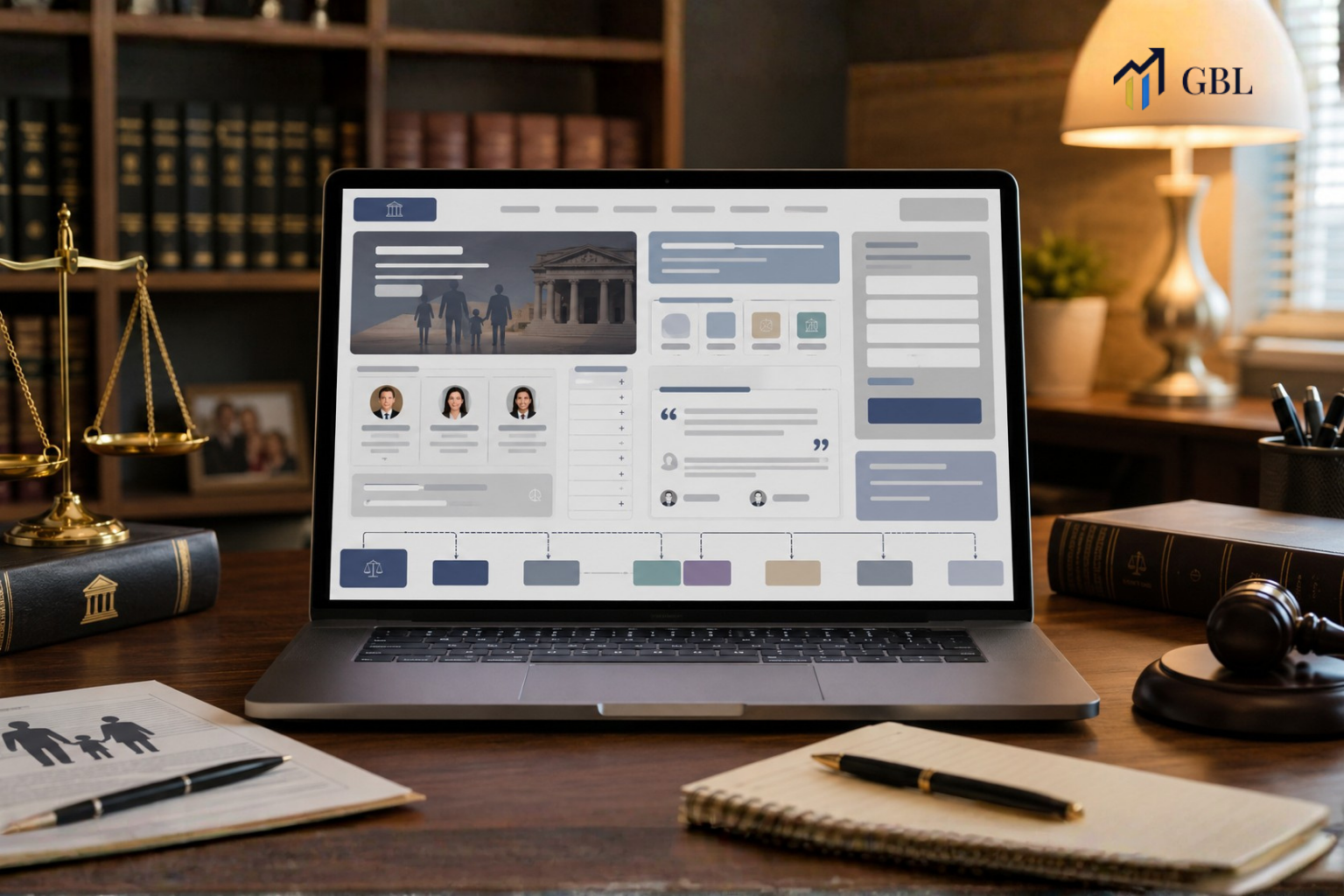
Practice area pages are one of the most important parts of a successful family law website. In website design for family lawyer websites, these pages act as the connection point between search intent and client conversion. They help search engines understand the legal services your firm provides while helping emotional users quickly find the information they need.
Family law users often search with urgent and highly specific intent. They may be looking for help with divorce, child custody, child support, adoption, mediation, or other sensitive legal matters. These users are usually closer to making a hiring decision compared to general website visitors. Because of this, practice area pages have a major influence on both SEO performance and consultation rates.
A strong practice area page should do more than simply list services. It should clearly explain the legal issue, answer common concerns, reduce emotional hesitation, and guide users toward taking the next step. Clear structure, supportive messaging, and organized content all help improve engagement and trust. When users feel understood and informed, they are more likely to stay on the website longer and contact the firm.
Website structure also affects how search engines rank these pages. Organized headings, proper internal linking, mobile usability, and keyword-focused content help search engines understand page relevance more clearly. Without this structure, even well-written content may struggle to compete in search results.
Another important factor is emotional usability. Family law users are often stressed or overwhelmed, which means cluttered layouts and confusing navigation can quickly reduce trust. A clean design with simple navigation helps users move through information naturally and comfortably.
Detailed practice area pages also support topical authority. When each service page connects to supporting blogs, FAQs, and related resources, the website becomes more valuable to both users and search engines. Over time, this strengthens visibility across multiple family law searches.
Real Law Firm Example
One firm creates short, generic service pages with very little detail, weak navigation, and no emotional positioning. Although the website looks modern, the pages fail to answer user concerns clearly and struggle to rank consistently.
Another firm builds detailed practice area pages with organized structure, supportive messaging, clear navigation, and SEO-focused content systems. Each page connects naturally to related blogs and FAQs. As a result, the firm ranks higher in search results, keeps users engaged longer, and generates more consultations consistently.
Key Points
- Practice area pages target high-intent users
- Structure impacts rankings and usability
- Detailed content improves trust and engagement
- Emotional clarity supports conversions
- SEO and user experience work together
This is where website performance begins. Many law firms underestimate how much practice area pages influence both visibility and conversions. However, in website design for family lawyer websites, these pages form the core of the entire SEO and lead-generation system. Strong structure, clear messaging, and connected content create better rankings, stronger trust, and more consistent consultation growth over time.
Why Emotional Clarity Improves Family Law Page Conversions
Family law users search under emotional pressure.
Clear communication reduces hesitation.
In family law lawyer website design, practice area pages should explain legal services in a calm and understandable way. Emotionally intelligent users do not want confusing legal jargon or overwhelming content. They want reassurance, clarity, and guidance.
Simple explanations improve engagement.
Real Law Firm Example
One firm uses overly technical legal language throughout service pages. Another explains services clearly with supportive messaging and structured guidance. The second firm keeps users engaged longer.
Key Points
- Emotional clarity improves trust
- Simple language reduces stress
- Guidance supports engagement
- Calm communication improves conversions
This is where emotional usability matters.
How Practice Area Structure Improves Rankings and SEO Visibility
Search engines need clear organization.
Structure improves relevance.
In web design for family lawyer websites, each practice area page should focus on a specific service and connect to supporting content through internal links. Divorce pages should connect to custody blogs, mediation guides, FAQs, and related resources.
Connected content strengthens authority.
Real Law Firm Example
One firm publishes disconnected pages with no supporting structure. Another builds connected topic clusters around family law services. The second firm gains stronger rankings across multiple keywords.
Key Points
- Structure improves SEO clarity
- Internal linking strengthens authority
- Topic clusters support rankings
- Organized pages improve scalability
This is where SEO authority develops.
Why Generic Service Pages Fail to Generate Consultations
Generic pages create weak trust.
Users want specificity.
In family law attorney website design, vague service pages often fail because they do not answer user concerns directly. Emotionally involved users want to understand the legal process, possible outcomes, and what steps to take next. Generic content creates uncertainty instead of reassurance.
Specificity builds confidence.
Real Law Firm Example
One firm uses short generic pages copied across multiple services. Another creates detailed pages tailored to each family law issue. The second firm converts more visitors into consultations.
Key Points
- Specific pages improve trust
- Generic content weakens engagement
- Detailed explanations support conversions
- Tailored messaging improves relevance
This is where consultations are influenced.
How Mobile Experience Impacts Family Law Practice Area Pages
Most users search from mobile devices.
Poor mobile usability creates frustration quickly.
In website design for family lawyer systems, practice area pages must load quickly and remain easy to navigate on smaller screens. Emotionally driven users often search during stressful situations and want fast answers without unnecessary complexity.
Mobile usability improves both SEO and conversions.
Real Law Firm Example
One firm has cluttered mobile pages with poor readability. Another optimizes layouts, spacing, and navigation for mobile users. The second firm improves engagement and inquiry rates.
Key Points
- Mobile usability improves engagement
- Clear layouts reduce frustration
- Speed impacts user trust
- Mobile UX supports conversions
This is where accessibility supports growth.
Why Internal Linking Strengthens Family Law SEO Systems
Pages should support each other.
Internal links create authority flow.
In legal website development, practice area pages should connect naturally to blogs, FAQs, and related services. This helps users continue learning while helping search engines understand topical relationships.
Disconnected content weakens rankings over time.
Real Law Firm Example
One firm publishes pages with no internal linking strategy. Another connects every service page to supporting resources. The second firm improves visibility across multiple family law searches.
Key Points
- Internal links strengthen authority
- Connected pages improve rankings
- Users stay engaged longer
- Structured systems improve scalability
This is where SEO systems become stronger.
How Trust Signals Improve Practice Area Page Performance
Trust reduces hesitation.
Hesitation prevents consultations.
In family law lawyer website design, practice area pages should include trust signals such as testimonials, attorney profiles, awards, FAQs, and consultation guidance. These elements help emotional users feel safer taking the next step.
Trust signals should feel calm and authentic.
Real Law Firm Example
One firm uses aggressive promotional claims without proof. Another uses structured testimonials and supportive trust indicators naturally. The second firm builds stronger credibility.
Key Points
- Trust signals reduce hesitation
- Testimonials strengthen credibility
- A professional presentation improves confidence
- Authenticity supports conversions
This is where users begin trusting the firm.
How GBL Builds Practice Area Pages That Rank and Convert
Most law firm websites focus only on design.
GBL focuses on strategy and performance.
At GBL, website design for family lawyer websites is built around SEO structure, emotional trust, user experience, and conversion strategy together. Every practice area page is designed to rank for high-intent searches while helping emotional users feel confident enough to contact the firm.
Strong pages should support rankings and consultations simultaneously.
Real Law Firm Example
One firm launches generic service pages with a weak structure. Another works with GBL to create detailed, SEO-focused practice area systems supported by blogs, FAQs, and conversion-focused UX. The second firm improves rankings and generates more consultations consistently.
Key Points
- GBL builds structured SEO systems
- Emotional UX improves engagement
- Practice area pages support conversions
- Connected content strengthens authority
This is where long-term growth becomes predictable.
Frequently Asked Questions
- Why are practice area pages important for family law websites?
They target high-intent searches and improve conversions. - How long should family law practice area pages be?
They should be detailed enough to answer user concerns clearly. - Why does emotional messaging matter in family law design?
Family law users often search during stressful situations and need reassurance. - Do internal links improve family law SEO?
Yes, they strengthen authority and improve topic relevance. - Why is mobile optimization important for family law websites?
Most users search for legal help on mobile devices.
Conclusion
Website design for family lawyer websites requires more than attractive visuals. Strong practice area pages combine SEO structure, emotional clarity, trust-building, and conversion-focused UX to support both rankings and consultations. Firms that build connected content systems create stronger authority, better user engagement, and more predictable long-term growth.
CTA
If your current family law website is generating traffic but not consultations, the problem may be your practice area structure. At GBL, we build family law websites designed around search intent, emotional trust, SEO authority, and conversion performance so your website becomes a real client-generation system instead of just an online brochure.