
Legal Website Development: Compliance, Disclaimer Placement, and Bar Rule Considerations
TL;DR
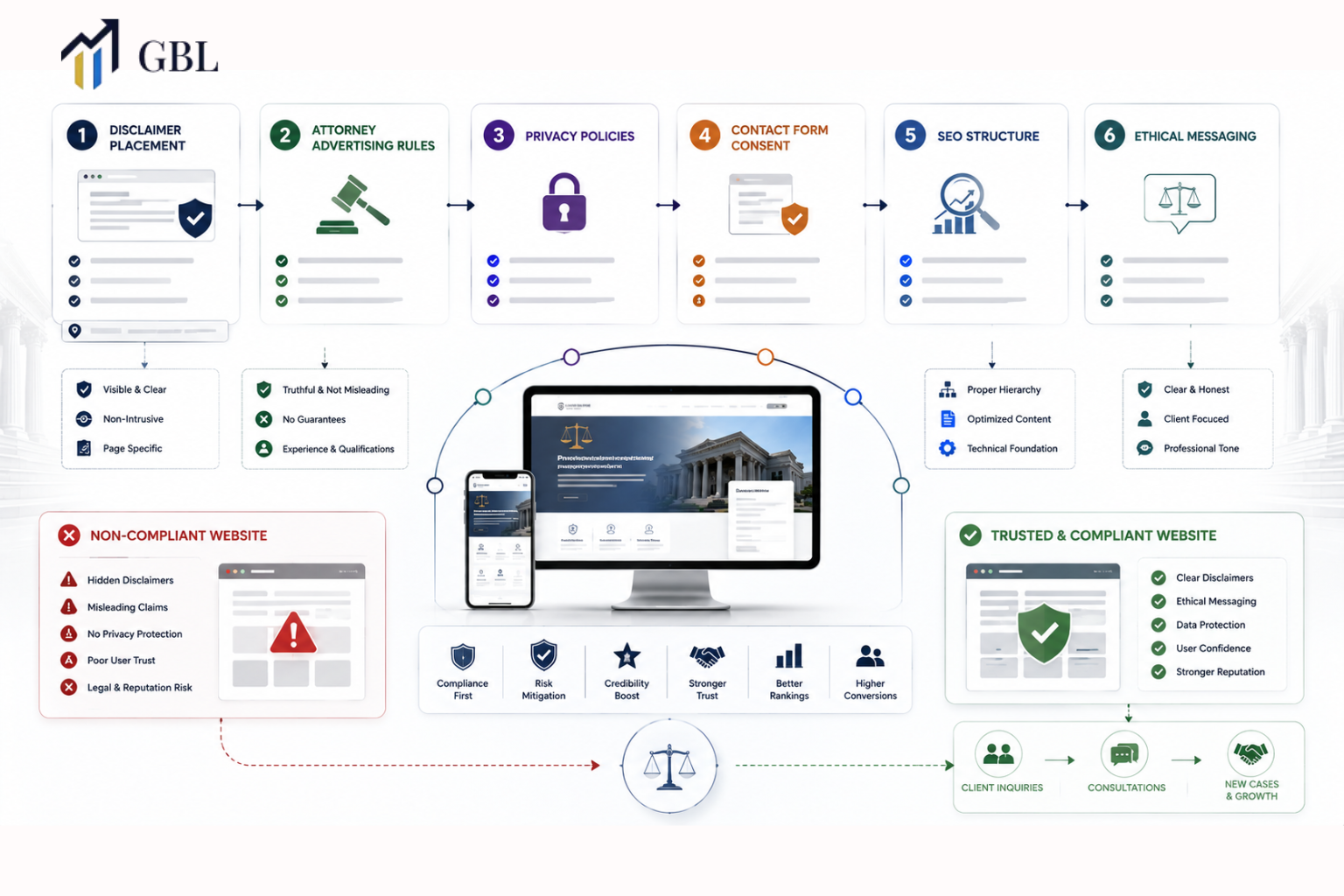
- Legal website development requires compliance from the beginning
- Bar rules influence website structure and messaging
- Disclaimer placement impacts trust and usability
- Poor compliance creates legal and reputational risk
- Structure must balance marketing and ethics
- Generic templates often miss compliance requirements
- Strategic planning protects both rankings and credibility
Introduction
Many law firms focus on design and SEO.
But compliance is often overlooked.
A website can look professional and still create legal risk if disclaimers, advertising rules, and ethical requirements are ignored. In legal website development, compliance is not a separate step added later. It must be part of the foundation. Without clear structure and proper planning, firms risk misleading users, violating bar rules, and damaging trust.
At GBL, we help law firms build websites that balance compliance, user experience, and performance together. Instead of treating compliance as an afterthought, we integrate it into the website structure from the beginning so firms can grow confidently while protecting their reputation and credibility online.
Why Compliance Must Be Built Into Website Development From the Start
Compliance is not optional, especially in the legal industry. It shapes the entire structure of a law firm website and influences how users interact with your firm online. In legal website development, many firms treat compliance as a small detail that can be handled after launch. However, this approach often creates larger problems later. Attorney advertising rules, disclaimers, privacy policies, and ethical guidelines should all be considered from the beginning of the project.
When compliance is ignored early, websites often require major revisions later. Pages may need to be rewritten, disclaimers added, or contact forms restructured to meet legal requirements. These changes increase costs, delay launches, and create unnecessary confusion during development. More importantly, they can damage trust if users feel the website lacks transparency or professionalism.
A compliant website protects both the firm and the user experience. Clear disclaimers help users understand the information they are reading. Proper privacy policies explain how data is handled. Structured messaging reduces the risk of misleading claims while still building confidence. When compliance is built into the foundation, the website becomes stronger, clearer, and easier to manage over time.
Another important factor is consistency. Planning compliance early allows developers, marketers, and attorneys to work together around the same structure. This creates alignment and prevents future conflicts between marketing goals and legal requirements.
Real Law Firm Example
One firm launches its website quickly without reviewing compliance requirements. After launch, they discover issues related to disclaimers, attorney advertising language, and privacy policies. The firm must revise multiple pages, which increases costs and delays marketing efforts.
Another firm plans around legal requirements from the start. Their disclaimers, policies, and messaging are integrated into the website structure during development. Because everything is aligned early, the project launches smoothly and builds stronger trust with users.
Key Points
- Compliance should guide website development
- Early planning reduces legal and structural risk
- Clear structure supports transparency and trust
- Proper planning prevents costly revisions
- Alignment improves long-term website performance
This is where strong foundations begin. Most law firms focus only on design and marketing while overlooking the compliance structure underneath. When compliance is built into the development process from the beginning, the website becomes more professional, more trustworthy, and far more effective in supporting long-term growth.
How Poor Disclaimer Placement Hurts Trust and User Experience
Disclaimers are meant to protect users and help law firms remain compliant, but poor placement can create the opposite effect. In legal website development, many firms either hide disclaimers completely or place them so aggressively that they interrupt the entire user experience. Both approaches create problems that affect trust, usability, and engagement.
When disclaimers are hidden in hard-to-find areas, users may not fully understand the limitations of the information they are reading. This increases legal risk and can create confusion later. On the other hand, when large popups or repetitive disclaimer messages appear across multiple pages, users often feel overwhelmed or frustrated. Instead of building trust, the website begins to feel distracting and difficult to navigate.
The goal is balance. Disclaimers should be visible enough to support compliance while remaining naturally integrated into the website structure. Users should be able to understand important legal information without feeling interrupted every few seconds. Clear wording and thoughtful placement help maintain professionalism while still protecting the firm.
Good disclaimer placement also improves user flow. When users can move through the website without unnecessary friction, they are more likely to stay engaged and continue exploring your services. This creates a smoother experience that supports both trust and conversions.
Another important factor is tone. Disclaimers should feel informative and transparent, not intimidating. Simple language helps users understand the message quickly and reduces confusion.
Real Law Firm Example
One firm places large disclaimer popups across nearly every page of the website. Users are repeatedly interrupted while reading content, and many leave the site before reaching the contact page.
Another firm uses structured disclaimer placement with clear visibility in important areas such as contact forms, footer sections, and informational pages. The messaging remains easy to understand without disrupting navigation. As a result, users stay engaged longer and interact with the website more comfortably.
Key Points
- Disclaimer placement directly impacts usability
- Clear language improves transparency and trust
- Balance reduces friction and interruptions
- Visibility supports legal compliance
- Smooth user flow improves engagement
This is where trust and compliance connect. Most law firms think disclaimers are only about legal protection, but placement also affects how users experience the website. When disclaimers are integrated thoughtfully into the structure, they protect the firm while still supporting a smooth, professional, and trustworthy user experience.
Why Attorney Advertising Rules Influence Website Messaging
Legal marketing comes with restrictions, which means website messaging cannot be careless. In legal website development, every statement on a website matters because attorney advertising rules are designed to protect users from misleading information. Claims about results, expertise, guarantees, or specialization can create compliance problems if they are exaggerated or unsupported.
Many law firms focus heavily on persuasive marketing but forget that credibility is more important than hype. Strong website messaging should build confidence while remaining clear, honest, and compliant. Users are already dealing with stressful legal situations, so they are looking for reassurance and professionalism. If the messaging feels overly aggressive or unrealistic, trust begins to decline.
Another issue is that exaggerated claims often create long-term reputational risks. Statements such as “guaranteed results” or “best lawyer in the city” may attract attention initially, but they can also lead to complaints, ethical concerns, or damaged credibility. Even if the intention is simply strong marketing, unsupported language can create unnecessary legal and reputational problems.
Clear and compliant messaging performs better over time because it feels trustworthy. Instead of making unrealistic promises, strong legal websites focus on experience, process, communication, and client support. This approach builds confidence naturally without crossing ethical boundaries.
Messaging also influences conversions. Users are more likely to contact a law firm that appears transparent and professional rather than one that feels exaggerated or overly promotional. Ethical marketing creates stronger long-term trust.
Real Law Firm Example
One firm uses aggressive claims across its website, promising outcomes and presenting unsupported statements about expertise. Over time, the firm receives complaints and begins losing credibility with users.
Another firm focuses on clear, compliant messaging. Their website explains services, experience, and process straightforwardly and professionally. Users feel more confident because the messaging is transparent and realistic. As a result, the firm builds stronger trust and improves engagement.
Key Points
- Website messaging must remain compliant
- Exaggerated claims increase legal and reputational risk
- Clear communication improves user trust
- Ethical marketing strengthens credibility
- Transparency supports long-term growth
This is where credibility matters. Most law firms believe stronger claims create stronger marketing, but trust is built through clarity and professionalism. When website messaging balances persuasion with compliance, it creates a stronger reputation and a more trustworthy user experience.
How Compliance Impacts SEO and Conversion Strategy
Compliance affects more than legal protection.
It also impacts performance.
In website development for lawyers, trust signals influence both rankings and conversions. Clear disclaimers, transparent messaging, and ethical positioning improve credibility with users. Search engines also favor websites that demonstrate trust and authority.
Poor compliance weakens user confidence and reduces engagement.
Real Law Firm Example
One firm ignores transparency and sees weak engagement. Another builds trust-focused pages and improves conversions.
Key Points
- Trust improves SEO performance
- Transparency supports conversions
- Compliance builds authority
- Ethical structure improves engagement
This is where compliance supports growth.
Why Generic Templates Often Miss Compliance Requirements
Templates prioritize convenience.
Compliance requires customization.
A generic law firm website template may look professional, but most templates are not designed around specific bar requirements or legal advertising rules. This creates gaps that firms may not notice until problems appear later.
Custom structure provides better control and flexibility.
Real Law Firm Example
One firm relies on a template with missing disclaimers. Another builds a structured custom site and avoids issues.
Key Points
- Templates miss legal details
- Generic systems create risk
- Custom structure improves control
- Compliance requires flexibility
This is where templates become risky.
How Clear Policies and Disclosures Reduce Legal Risk
Users expect transparency.
Transparency builds confidence.
In web development for lawyers, privacy policies, terms of use, and contact disclaimers are essential. These elements clarify how information is handled and reduce misunderstandings about attorney-client relationships.
Clear disclosures improve both compliance and trust.
Real Law Firm Example
One firm lacks clear disclosures and receives user complaints. Another uses structured policies and avoids confusion.
Key Points
- Policies improve transparency
- Clear disclosures reduce disputes
- Structure protects the firm
- Trust increases engagement
This is where protection improves.
Why Mobile and Contact Forms Require Extra Compliance Attention
Mobile users move quickly.
Forms create legal responsibility.
In lawyer website development, contact forms and mobile experiences must be designed carefully. Users often submit sensitive information quickly without fully understanding disclaimers or consent language. Poorly structured forms increase legal and compliance risk.
Clear notices improve clarity and reduce confusion.
Real Law Firm Example
One firm uses unclear contact forms. Another adds visible disclaimers and structured consent messaging. The second firm improves trust and reduces risk.
Key Points
- Contact forms require clarity
- Mobile users need a simple structure
- Consent messaging matters
- Visibility improves compliance
This is where details matter most.
How Strategic Website Development Balances Marketing and Ethics
A law firm website should generate leads.
But it must remain compliant.
In legal website development, the best websites balance conversion strategy with ethical structure. Strong websites guide users toward action while maintaining transparency, trust, and compliance with legal advertising standards.
The goal is sustainable growth without unnecessary risk.
Real Law Firm Example
One firm focuses only on aggressive marketing. Balances performance with compliance. The second firm builds stronger long-term credibility.
Key Points
- Ethics and marketing must align
- Compliance supports long-term growth
- Trust improves conversions
- Structure protects performance
This is where sustainable growth happens.
Frequently Asked Questions
- Why are disclaimers important on law firm websites?
They reduce legal risk and improve transparency. - Can website messaging violate bar rules?
Yes, misleading claims can create compliance issues. - Do templates support legal compliance?
Most generic templates lack proper legal structure. - Where should disclaimers be placed?
They should be visible without disrupting usability. - Does compliance affect SEO?
Yes, trust and transparency influence performance.
Conclusion
Legal website development is not just about design and SEO. It is about creating a structured system that balances marketing, compliance, and user trust. When websites are planned strategically from the beginning, firms reduce risk while improving credibility, rankings, and conversions.
CTA
If your website is generating uncertainty instead of trust, the issue may not be design alone. Most law firms overlook how compliance, disclaimer placement, and structure impact performance. At GBL, we build law firm websites designed to balance SEO, conversions, and ethical compliance from the start. Instead of relying on generic templates and risky shortcuts, you get a structured system built for long-term growth and credibility.