
Website Development for Lawyers: Timeline, Phases, and Who Should Approve What
TL;DR
- Website development for lawyers follows clear phases, not random tasks
- Most delays happen due to unclear approvals
- Each stage requires specific decisions from the firm
- Poor planning leads to cost overruns and delays
- Structured development improves speed and results
- Clear ownership reduces confusion
- The right process leads to faster launch and more cases
Introduction
Many law firms start website development for lawyers with excitement, but end up frustrated by delays, confusion, and unexpected costs.
The issue is not development itself. It is the lack of structure and clarity in the process.
Website development for lawyers works best when every phase is clearly defined, timelines are realistic, and responsibilities are assigned. When you understand who needs to approve what and when, your project moves faster, stays on budget, and delivers better results.
How Website Development for Lawyers Actually Works Step by Step
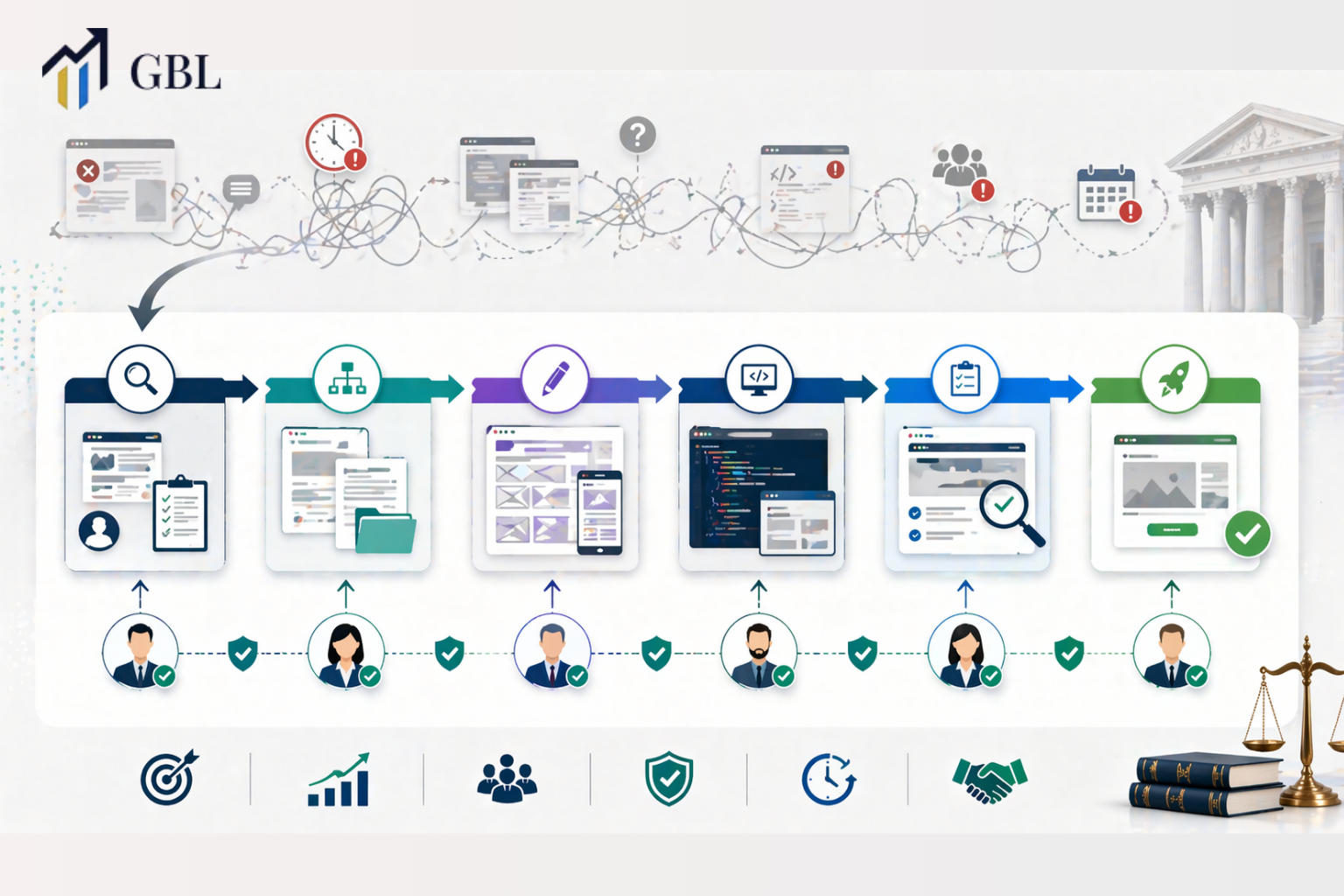
Website development for lawyers is not a single task. It is a structured process with multiple stages that depend on each other.
Each phase must be completed properly before moving to the next.
Real Law Firm Example
One firm jumps straight into design without planning. Another follows a structured process. The second firm launches faster and sees better results.
Key Points
- Development follows clear phases
- Each step builds on the previous
- Skipping steps causes problems
- Structure improves outcomes
This is the foundation of successful projects.
Most law firms do not follow this process.
Phase 1: Discovery and Planning Defines Everything That Follows
The first phase of website development for lawyers is discovery. This is where your services, goals, and structure are defined.
Without this step, everything else becomes unclear.
Real Law Firm Example
A firm skips planning and faces delays. Another plans properly and moves smoothly.
Key Points
- Define services and goals
- Plan site structure
- Identify the target audience
- Align SEO strategy
Planning controls the entire project.
Most law firms rush this stage.
Phase 2: Website Structure and Content Planning Controls SEO and Conversions
In this phase, your website is organized into pages and content. This is where law firm web development connects with SEO.
Structure determines how your site will perform.
Real Law Firm Example
A firm builds random pages. Another creates structured service pages. The second firm ranks higher.
Key Points
- Define page hierarchy
- Plan service pages
- Create content strategy
- Align with search intent
Structure drives rankings and conversions.
Most law firms underestimate this step.
Phase 3: Design Phase Shapes User Experience but Requires Clear Approval
Design is where your site starts to take shape visually. However, it must follow the structure defined earlier.
Design without strategy leads to poor results.
Real Law Firm Example
A firm keeps changing design decisions and delays the project. Another approves quickly and moves forward.
Key Points
- Design should follow the structure
- Limit unnecessary revisions
- Approve quickly
- Focus on usability
Design must support performance.
Most law firms over-focus on visuals.
Phase 4: Development Phase Builds the Functional Website
This is where the actual lawyer website development happens. Developers turn design into a working website.
At this stage, changes become more expensive.
Real Law Firm Example
A firm requests major changes during development and delays the launch. Another sticks to the plan and finishes on time.
Key Points
- Development follows the approved design
- Changes increase cost
- Testing is essential
- Performance is built here
Development requires discipline.
Most law firms make late changes.
Phase 5: Testing and Pre-Launch Prevent Costly Mistakes
Before launch, the site must be tested. This ensures everything works properly.
Skipping testing leads to problems after launch.
Real Law Firm Example
A firm launches without testing and faces issues. Another test thoroughly and launches smoothly.
Key Points
- Test all pages
- Check forms and functionality
- Optimize performance
- Fix issues early
Testing protects your investment.
Most law firms rush this phase.
Who Should Approve What During Website Development for Lawyers
Clear approval roles are critical in website development for lawyers. Without defined responsibilities, projects often slow down, become inconsistent, and lead to confusion between the firm and the development team. When multiple people are involved but no one has final authority, decisions get delayed, revisions increase, and timelines stretch longer than expected.
Each stage of the project requires specific decisions, and those decisions should come from the right person at the right time. Strategy decisions should not be handled the same way as design feedback, and technical approvals should not be delayed by unnecessary discussions. When approval roles are clearly assigned, the entire process becomes faster, smoother, and more predictable. This also reduces back-and-forth communication and helps keep the project aligned with its original goals.
A structured approval system also improves quality. When each person focuses on their area of responsibility, decisions become more focused and effective. This ensures that strategy, content, design, and functionality all work together instead of conflicting with each other.
Real Law Firm Example
One firm starts website development for lawyers without assigning clear roles. Partners, associates, and staff all give input at different stages, often with conflicting feedback. As a result, the project faces delays at every step, revisions increase, and the final launch takes much longer than planned.
Another firm assigns clear roles from the beginning. Partners approve overall strategy, the marketing team handles content decisions, and a designated point of contact manages communication with the developer. Design approvals are handled quickly, and final review happens only once everything is aligned. This structured approach allows the project to move efficiently and launch on time.
Key Points
- Partners approve strategy and direction
- Marketing team approves content and messaging
- Internal team reviews design and usability
- A single decision-maker manages communication
- Final approval is done before launch
Clear roles reduce delays and improve decision-making. They ensure that every part of the website development process moves forward without confusion or unnecessary revisions.
Most law firms do not define approval roles early. This leads to repeated feedback, missed deadlines, and frustration during the project. When roles are clearly assigned from the start, website development for lawyers becomes a structured process that saves time, controls cost, and delivers better results.
Why Website Development Projects Get Delayed and Over Budget
Website development projects often get delayed and go over budget when planning is weak and decisions are unclear. At the start, everything may seem simple and manageable. But as the project moves forward, small gaps in planning begin to create bigger problems. When the structure, content, and goals are not clearly defined early, developers are forced to make adjustments during the build phase. Each adjustment adds more work, which increases both time and cost.
One of the biggest reasons for delays is constant change. When decisions are not finalized in advance, law firms tend to request updates throughout the process. These changes may seem small, such as modifying content, adjusting layouts, or adding new pages. However, each change affects multiple parts of the website, requiring redesign, redevelopment, and additional testing. This slows down progress and creates a chain reaction that extends the timeline.
Another issue is a lack of clear communication. When there is no defined structure for approvals or feedback, developers wait for responses, revisions get repeated, and the workflow becomes inconsistent. This not only delays the project but also reduces efficiency and increases frustration on both sides.
Real Law Firm Example
One firm begins development without a clear plan. As the project progresses, they continue to change content, design, and structure. Each revision adds new tasks, and the project takes months longer than expected. Costs increase, and the final result still lacks consistency.
Another firm takes the time to plan everything. They define their structure, finalize content, and assign clear decision-making roles. Because of this, development moves smoothly, timelines are met, and the website launches without unnecessary delays.
Key Points
- Frequent changes increase cost and complexity
- Lack of clarity slows decision-making
- Poor planning leads to repeated revisions
- Scope creep extends timelines and budget
- Clear structure keeps the project on track
Planning is what controls both cost and time. When everything is defined early, development becomes predictable and efficient. Without planning, even a simple project can become complicated and expensive.
Most law firms underestimate how important this step is. They focus on starting quickly instead of planning properly, which leads to delays, higher costs, and missed growth opportunities.
The GBL System for Website Development for Lawyers
At GBL, we follow a structured system for website development for lawyers. Every phase is planned, and every decision is clear.
This ensures faster execution and better results.
Real Law Firm Example
A firm follows a structured process and launches on time with strong performance.
Key Points
- Clear phases
- Defined approvals
- SEO integration
- Conversion focus
To see how this works in practice, explore our website development for lawyers process here.
This is how successful projects are built.
Most law firms never use this system.
What Results Law Firms Can Expect From a Structured Development Process
When development is structured, results become predictable. Your website launches faster and performs better.
The difference is not effort, but process.
Real Law Firm Example
A firm follows a structured process and sees better performance after launch.
Key Points
- Faster launch
- Better SEO performance
- Improved conversions
- Consistent growth
This is what structured development delivers.
Most law firms never reach this level.
FAQs
- How long does website development for lawyers take?
Typically 4–12 weeks, depending on complexity. - Why do website projects get delayed?
Lack of planning and unclear approvals. - Who should approve website decisions?
Partners, marketing team, and project lead. - Can I make changes during development?
Yes, but it increases cost and delays. - What is the most important phase?
Planning and structure.
Conclusion
Website development for lawyers is not just about building a site. It is about following a structured process that ensures clarity, speed, and results. When each phase is planned and approvals are clear, your website becomes a reliable system for growth instead of a delayed project.
CTA
If you are planning website development for lawyers, the biggest mistake you can make is starting without a clear system. Most law firms face delays, rising costs, and poor results because their processes are unstructured. At GBL, we guide every phase from planning to launch with a focus on SEO, conversions, and long-term growth. Instead of guessing what works, you get a proven system that helps you launch faster and generate real case inquiries. If you want a website that actually performs, this is where it starts.